

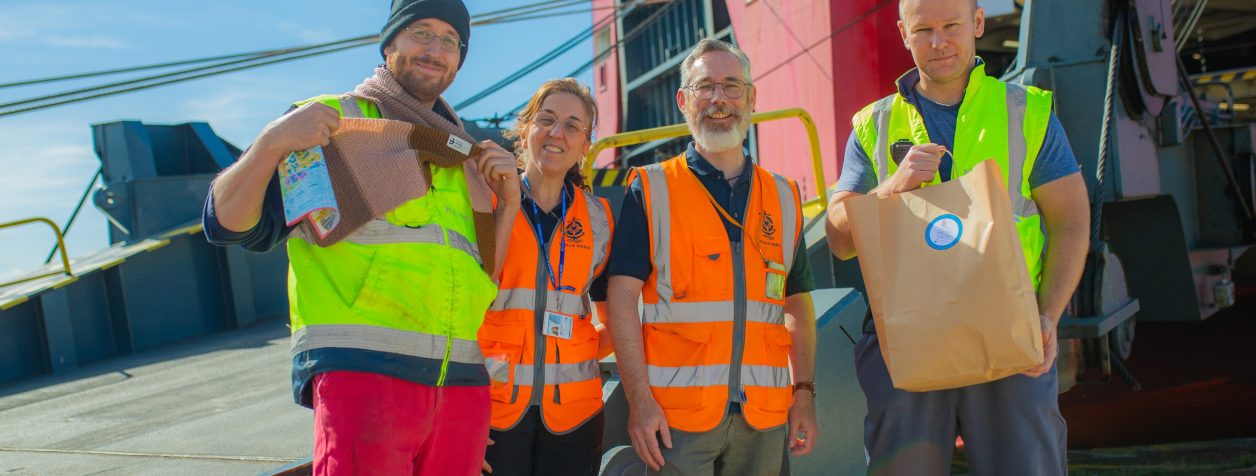
A conversation with Robert Ashdown, the newly appointed Chair of Stella Maris
David Byrne (DB): To start, could you tell us about your relationship with Stella Maris? How did you first become involved, and what has kept you involved up to now, especially as you’ve moved into the role of Chair of Trustees?
Robert Ashdown (RA): I first became involved with Stella Maris as a trustee around 2015-2016. I’ve worked in the maritime industry for pretty much all of my professional life, and you see first-hand what happens to seafarers and how they are treated.
For the vast majority, they’re professional individuals doing good jobs for good companies, on good ships. But even for them, it’s a hard life: long contracts, long periods away from family, and the perils of the sea. These are difficult and tough jobs.
Sadly, there is also a significant “tail” in the shipping industry made up of substandard operators who cut costs wherever they can, including at the expense of seafarers. So alongside very professional companies and crews, you encounter some very sad cases of exploitation, abandonment, and lack of duty of care – both in shipping and in the fishing industry.
Stella Maris looks after what we call “all people of the sea”: offshore workers on oil rigs, fishers in inshore boats and deep-sea trawlers, and commercial seafarers on shipping lines. What keeps me committed is the really valuable work Stella Maris does in reaching out to all those people, whether they’re working for good employers and simply need support when they come into port, or they’re in acute situations of abandonment or mistreatment.
We can provide direct help and facilitation, particularly for foreign crews far from home. And the care extends in both directions: sometimes it’s the seafarer who needs help, and sometimes it’s their family – perhaps a partner has died or children need immediate charitable support. We can support both seafarers and their families.
Alongside that very practical “sharp end” work, there is the strategic advocacy Stella Maris undertakes to improve conditions for that tail of rogue operators, to ensure legal minimum standards are in place and upheld, and to raise the baseline toward the standards enjoyed by the best-treated seafarers.
DB: For readers who spend most of their lives on land and may know little about life at sea, what do you think they often fail to appreciate about the lives and challenges of seafarers and fishers?
RA: The first thing people often don’t appreciate is just how much everyone relies on shipping and the sea. Around 90% of world trade by volume is moved by sea. If you look around the room you’re in, at the clothes you’re wearing, almost all of it will have come by ship.
There’s a phrase we sometimes use: if it weren’t for shipping, half the world would starve and the other half would freeze. Ninety per cent of everything comes by sea. Even if people live miles from the coast, they have a direct, vested interest in seafarers being able to do their jobs.
People also tend to romanticise life at sea. They imagine sailors travelling the world and spending lots of time in port. The reality is very different. Contracts of nine months or a year, even longer, are not uncommon. Modern shipping is so efficient that ships spend very little time in port. Large container ships can be in and out within eight hours, and cargo operations are an incredibly intense period for the crew, leaving very little time for shore leave.
Since 9/11, port security has tightened significantly. Even if you can get onto the port premises, getting out into the town or city is another matter with visas, security checks, and so on. For many seafarers, especially those from certain countries, it’s very difficult to come ashore at all.
Then there are the natural perils of the sea, particularly for fishing vessels. Crews are internationally mixed, so you might be the only person of your nationality in a crew of twenty, and there may be twenty different nationalities on board. It can be quite a lonely environment.
Connectivity is still often poor, especially at the “tail end” of the industry. Once you leave port, you’re likely to lose mobile phone coverage and be out of contact for weeks until the next port of call. In a world where we’re used to constant connection, that disconnection is very challenging.
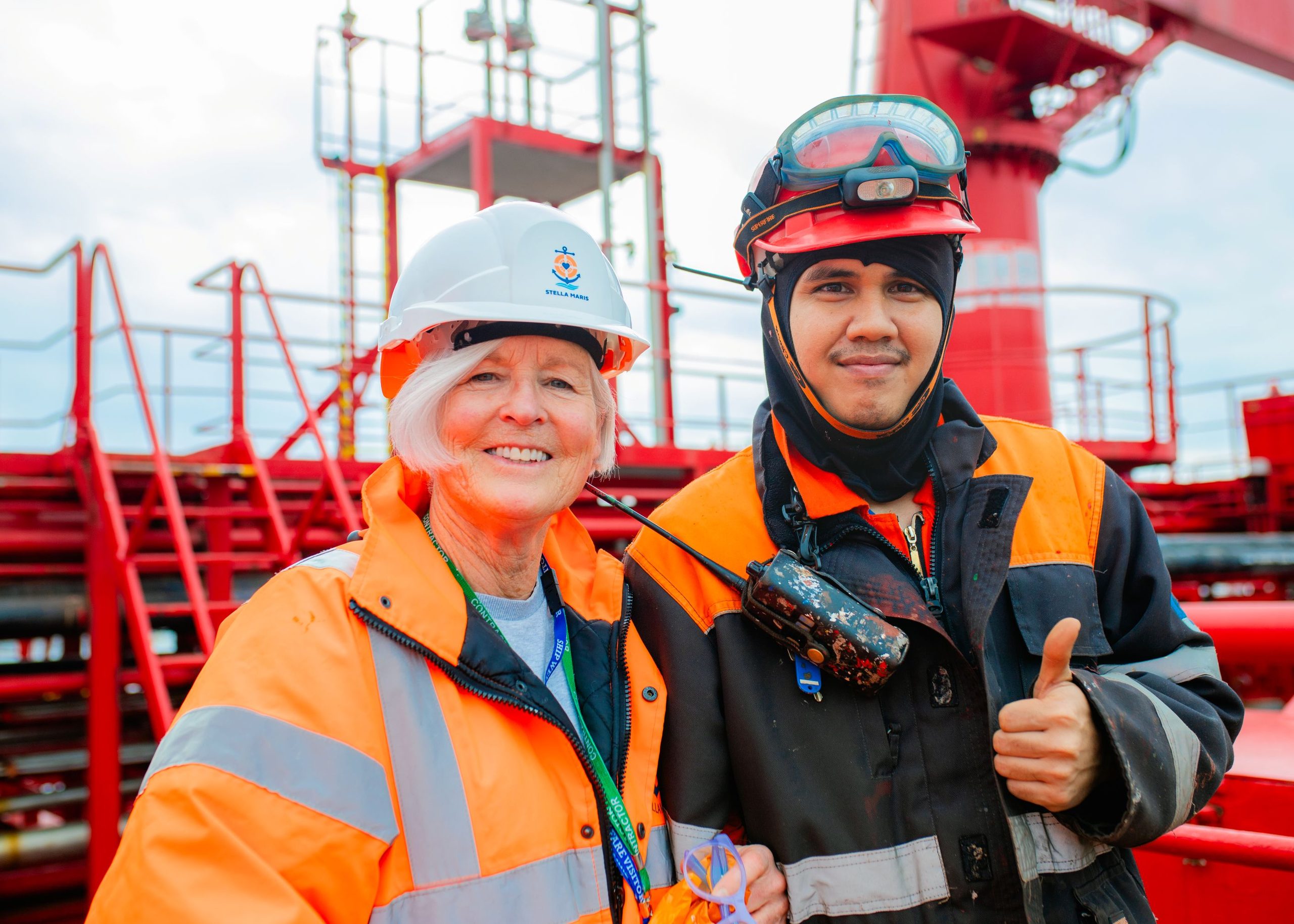
DB: How does that limited connectivity – and sometimes complete disconnection – affect seafarers’ relationships with family and friends?
RA: It has a huge impact. For many years, one of the first things our ship visitors did was to provide ways to connect home, initially with phone cards, and more recently with SIM cards, so that seafarers could call their families as soon as they were in range.
Things are improving. Starlink and similar technologies have made a dramatic difference in connectivity at sea. But that brings its own challenges. In the past, ignorance could sometimes be bliss. If something went wrong at home, you might not hear about it until you were back ashore.
Now, you might be at sea with six months of your contract still to go and receive very bad news from home. You then have to process that news while living and working on board, doing a demanding job, with no possibility of going back to deal with things personally. That can be emotionally extremely difficult.
DB: Over the past few years we’ve seen growing geopolitical instability, war, and conflict. How does that wider context affect seafarers?
RA: I’d say there are two, perhaps three, levels to that.
For the vast majority of crews, they won’t go near designated warlike zones. But even then, there’s a kind of low-level stress, wondering what would happen if their ship were asked to make a voyage into a high-risk area, and being conscious that in some regions, such as the Black Sea, merchant ships increasingly seem to be considered fair game and can be targeted.
It’s never pleasant to feel that your industry is seen as a legitimate target in conflict.
For crews who actually operate in warlike areas, it’s another order of magnitude. Ideally, they’re there voluntarily, having been offered the chance to disembark and refuse those voyages, but that may not always happen. Those crews are having to operate in genuinely warlike conditions, and as you can imagine, that is extremely stressful and unpleasant.
Then there’s the continuing problem of piracy. It ebbs and flows, but we’re seeing an unwelcome resurgence off the coast of Somalia, for example. Even if a boarding amounts “only” to armed robbery, pirates come aboard with assault rifles, looking for the ship’s safe and valuables. There’s always a physical threat.
In more serious cases, they’re genuine pirates seeking to seize the vessel itself. The ship may be taken close to shore and anchored, with the crew held as hostages while negotiations take place. That can last months, even years. So sailing in those areas requires constant vigilance and adds significantly to an already heavy burden.
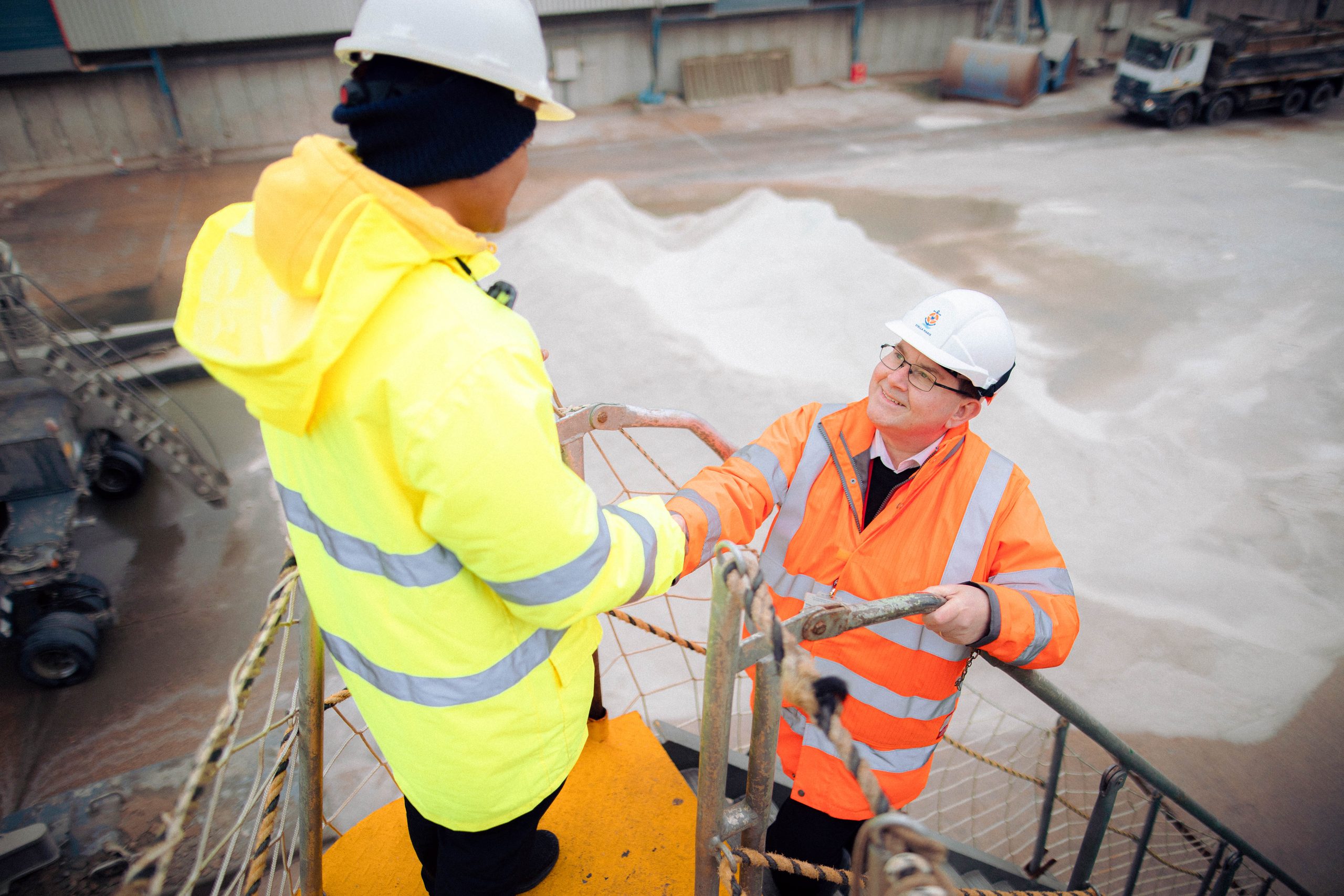
DB: Could you share some concrete examples, either personal or from the wider work of Stella Maris, that illustrate the impact the charity has for seafarers and fishers?
RA: My own ship-visiting experience is limited (I have a full-time day job) though trustees do try to visit chaplains and ship visitors where we can. But Stella Maris has the world’s largest network of chaplains and ship visitors, and there are countless examples of their impact.
To give a flavour: recently we provided emergency welfare to 21 crew members on an arrested vessel in Scotland, whose wages and repatriation remained uncertain. Our chaplains have supported Ghanaian fishers who were abandoned, injured seafarers needing hospital care and repatriation, and families affected by conflict and natural disasters, for instance after a recent earthquake in the Philippines.
In southern England and Wales, there was a terminally ill fisher who needed support with hospital treatment and travel. In Liverpool and the North West, we’ve been expanding our presence and responding to similar needs.
Sometimes the support is legal, such as helping with visas or documentation. Sometimes it’s medical, sometimes pastoral or spiritual. This kind of work is the bread and butter of the charity. There are countless instances every month of our teams going on board and making a very tangible difference. There is absolutely no shortage of need.
DB: Stella Maris describes itself as the official maritime charity of the Catholic Church. What difference does that Catholic identity make to the way you approach your work?
RA: For over a century, Stella Maris has stood alongside the people of the sea as the official maritime charity of the Catholic Church. It was founded in 1920 as the Apostleship of the Sea and given its modern canonical and pastoral framework by Saint John Paul II in his 1997 apostolic letter Stella Maris.
That framework sets out a mission of practical assistance, pastoral care, spiritual accompaniment, and advocacy to ensure no seafarer or fisher is forgotten, left behind, or left alone. Our work is founded on the belief that every human person is created in the image and likeness of God and possesses inherent dignity. That conviction shapes every aspect of our ministry.
Whether we’re offering practical help to an abandoned crew, providing pastoral support after a traumatic incident, advocating with governments and flag states for safer working conditions, or simply listening to someone who needs to talk, we aim to embody the compassion, justice, and hope at the heart of the Gospel.
So our Catholic identity is central to who we are. It’s the spiritual glue that binds us together, inspires our values, guides our decisions, and gives meaning to our service.
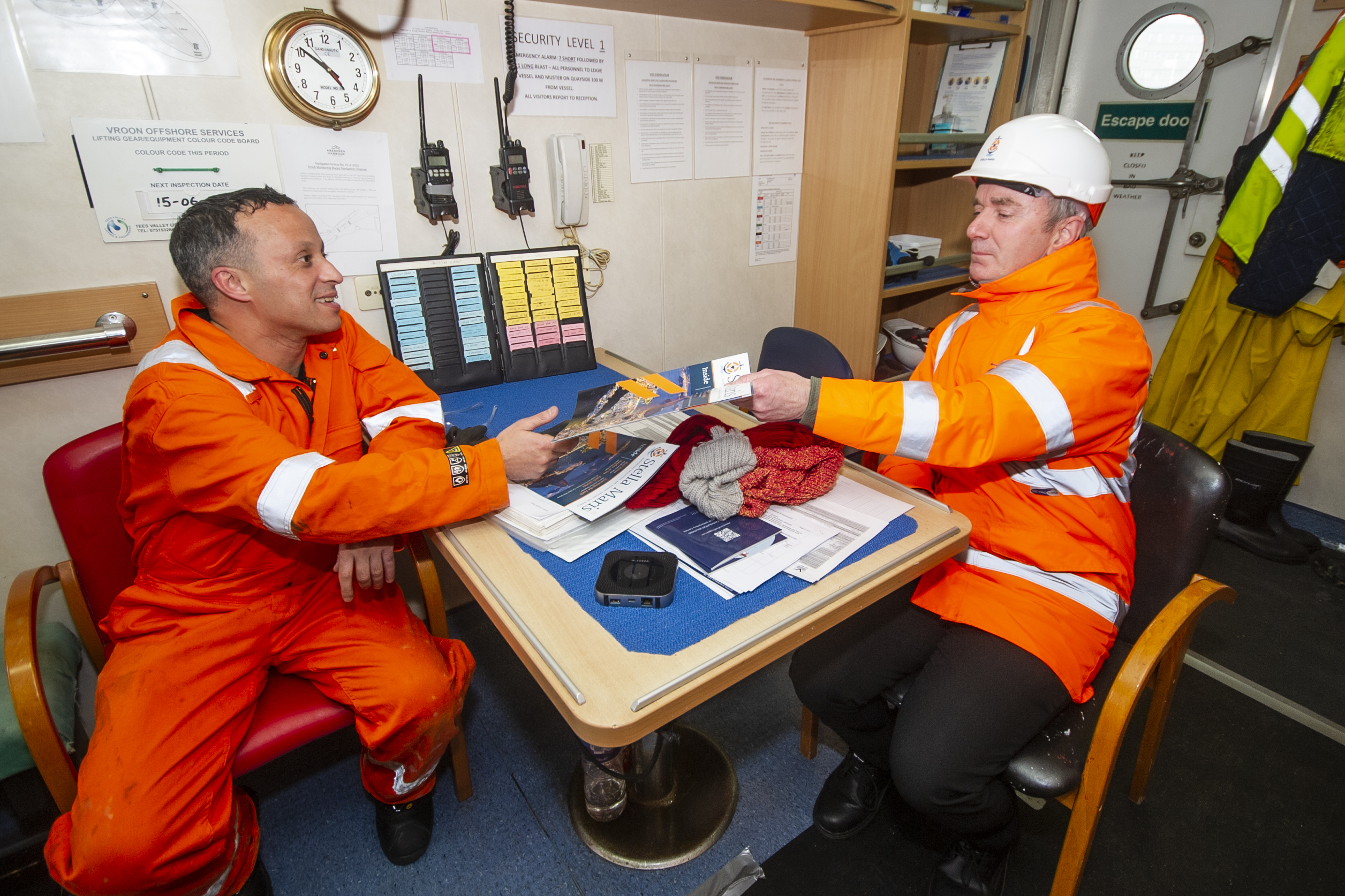
DB: Professionally, you work with IACS, which focuses on shipping from a safety and regulatory perspective. How do that role and your role at Stella Maris intersect? Do you find them mutually enriching?
RA: IACS (the International Association of Classification Societies) is a safety-driven organisation. All our work is about the safety of ships: their design, construction, and ongoing maintenance to ensure they’re safe and fit for purpose.
Many seafarers take comfort in knowing they’re sailing on an IACS-classed ship, because they know it has been built properly and maintained to rigorous standards. Simply stepping aboard such a vessel can be a source of reassurance.
More broadly, ship design and construction has to be built around the centrality of the seafarer. The “human element” is key. Human-centred design is fundamental from the earliest stages: when you first put pen to paper to design a ship, you have to consider how the seafarer will operate within that vessel.
That might mean arranging machinery spaces so that you don’t need to trek up and down multiple staircases to fetch a tool, or designing mooring decks so that seafarers can work outside rope snap-back zones. Mooring lines under massive tension are extremely dangerous; good design can materially improve safety.
If we in IACS do our job properly, we make the subsequent operation of the ship and the safety and wellbeing of seafarers much better. That dovetails very neatly with Stella Maris’ concern for the dignity and safety of the people of the sea.
DB: From the point of view of seafarers themselves, what makes a ship a good place to live and work? How much input do they have into ship design, and what tends to matter most to them?
RA: For the majority of seafarers, they have little or no direct input into the design of the ship they work on, just as most of us aren’t involved in designing the office we work in. You take the job and work with the environment you’re given.
Many shipping companies don’t build their own ships; they buy tonnage that’s already been designed and built, sometimes second-hand. But some of the larger, better-resourced companies do involve seafarers in the design process. They’ll bring experienced crew in to comment on layout, equipment positioning, and so on, precisely to capture that lived experience.
There are two broad aspects. The first is the working environment: making sure the ship is ergonomically designed so that routine operations are as straightforward, efficient, and fatigue-reducing as possible. The second is the accommodation and recreational spaces.
Some of this is set in international regulation, for example, through the International Labour Organization and the Maritime Labour Convention, but there’s still a lot of scope for commercial decisions. Ships exist primarily to carry cargo, so there is always a tension between maximising cargo space and providing good accommodation and recreation facilities for the crew. As with any balance, some ships are better than others.
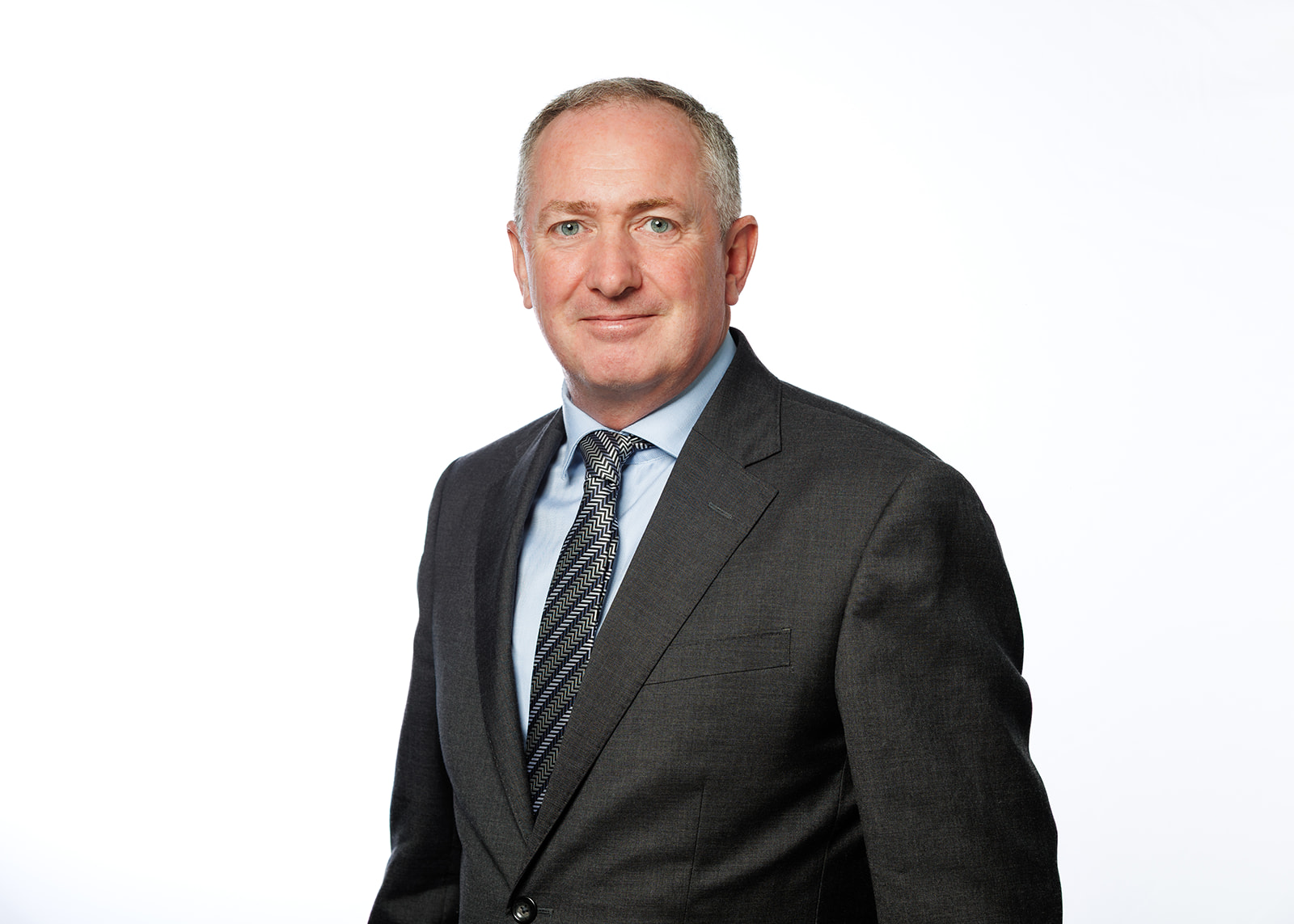
DB: You’ve recently taken over as Chair of Trustees of Stella Maris. What are your hopes for the charity over the next few years? Are there particular areas you’d like to strengthen or develop?
RA: Stella Maris is in a very good place. It’s a strong charity, doing its work well, with an excellent team in head office and a dedicated network of chaplains and ship visitors. I’m fortunate to inherit a strong legacy.
But we can never stand still. We need to ensure Stella Maris remains well placed to face the increasing challenges confronting seafarers and fishers: geopolitical instability, evolving security threats, changing patterns of connectivity, the rise of AI, and so on.
On the practical side, I’m keen to grow the number of ship visits, both by chaplains and volunteers, because that’s where the real work happens. At the same time, we need to deepen our advocacy on behalf of people of the sea, which means better communication, better knowledge, and better understanding among those who may live far from the coast but still rely on maritime trade.
All of this must be underpinned by strong internal systems and tools, so that every pound generously donated by our supporters is spent wisely and efficiently and converted as directly as possible into front-line support.
We also need to strengthen and diversify our income. Since 90% of everything moves by sea, 90% of people have a stake in supporting the people of the sea. Our task is to get that message across and build a broad base of support.
DB: Our work places a strong emphasis on the dignity of work and the dignity of the worker, and we’re trying to bring lived experience into our advocacy. From your perspective, what are the key challenges to the dignity of work for seafarers and fishers that policymakers should be aware of?
RA: There is certainly dignity in seafaring and fishing. As I said earlier, the majority of seafarers are well treated, highly skilled professionals doing important work. It’s important we don’t present every seafarer as a victim.
That said, even those on the best-managed ships face significant challenges that are often outside their employer’s control. Visa regimes, for example, can severely restrict access to ports and shore leave. Ensuring that seafarers can move reasonably freely when they’re ashore is a key issue.
One of the clearest lessons from COVID-19 was the importance of recognising seafarers as key workers. Various professions were categorised as key workers, but seafarers were not. That had many knock-on effects – from access to vaccinations to travel exemptions. When flights were grounded, many seafarers were effectively trapped on board for months, unable to set foot ashore.
So one priority is to ensure that, in future crises, governments treat seafarers as key workers whose movement and welfare are essential to keeping global supply chains running.
For the “tail” of the industry we mentioned, robust enforcement of international standards is absolutely essential. Port state control needs to be vigilant. Domestically, agencies such as the police and the Home Office need to take abuses of modern slavery seriously, particularly in the fishing industry, and act decisively to prevent and punish exploitation.
More broadly, we need societal recognition of seafarers as workers deserving the same respect as land-based workers, especially at the ship–shore interface. They should be treated as welcome guests, not automatically viewed with suspicion or as vectors of disease. Awareness-raising is key, because many of these issues are invisible to the general public.
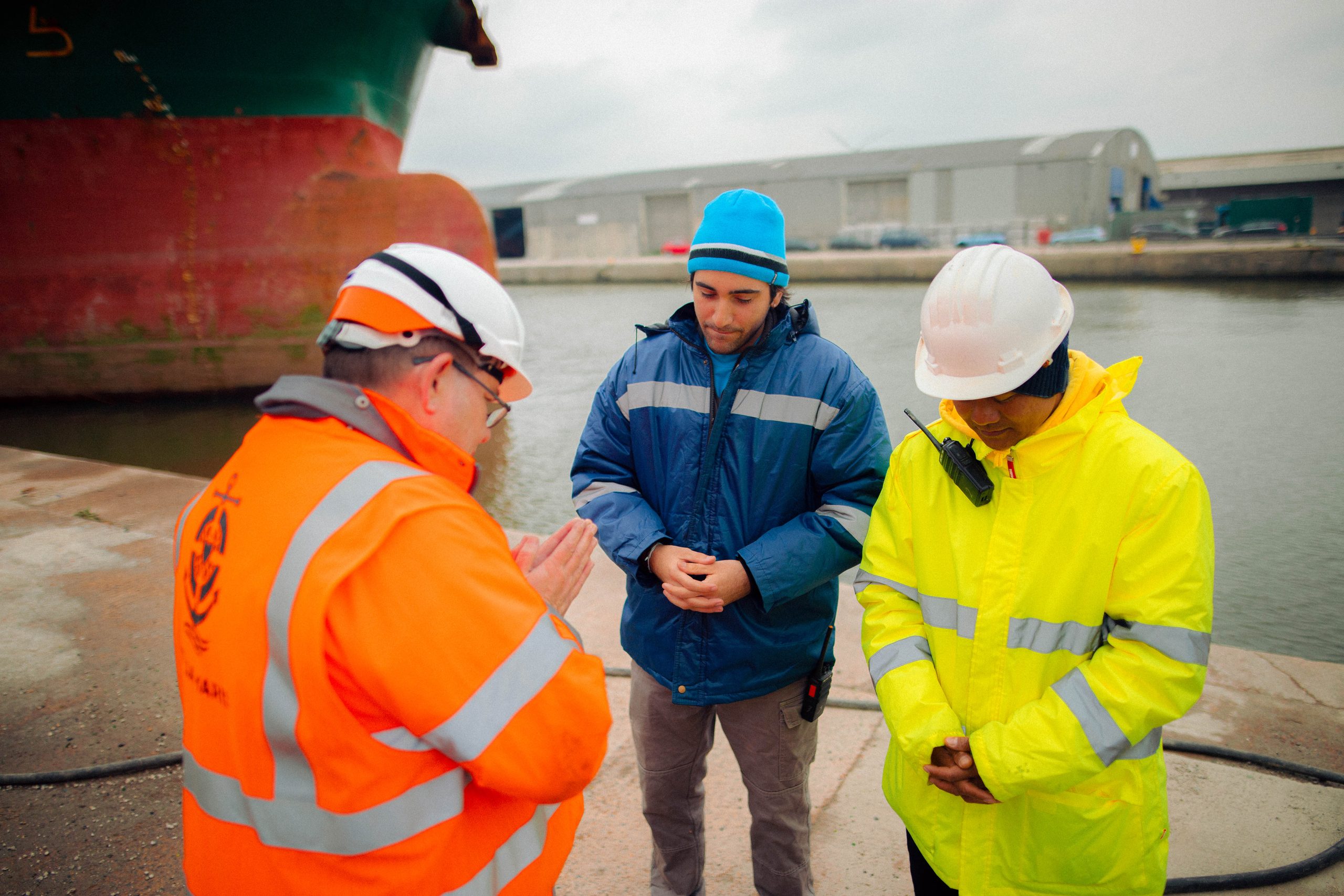
DB: We’ve spoken a lot about the challenges and the need for support. What about the positive side? What are some of the joys and exciting aspects of being a seafarer or fisher, especially for young people considering their options?
RA: It’s actually a very exciting time to go to sea. The drive to decarbonise shipping is bringing in new fuels and technologies, and ships are very self-sufficient environments. When new systems come on board, the engineering crew are responsible for understanding, operating, and maintaining them. The training is good and structured, and the level of responsibility you receive at a young age can be considerable.
You might go to sea at 18 instead of going to university, and find yourself working on a 200,000-tonne oil tanker transiting major canals and trading globally. You’ll be part of the team that keeps that ship safely operating. That can be very fulfilling.
It also equips you with a strong set of technical and practical skills. Many people go to sea for 10–15 years and then, often as they’re starting families, move ashore in their early 30s. They bring that seafaring experience into shore-based roles across the maritime sector.
Fishing can be different, often with a strong family tradition, following fathers and grandfathers into the industry. But in both seafaring and fishing, there’s a deep sense that you’re doing work the world relies on. Without the products you move or catch, modern life couldn’t function in its current form. That sense of contributing something essential gives real value and dignity to the work.
DB: Finally, could you say a bit about Stella Maris as a global network? What difference does that worldwide presence make?
RA: Stella Maris UK is, in a sense, the home of the organisation and a strong national charity. But we have counterparts all over the world, and that global network enables us to do something unique among maritime charities: provide genuine wraparound care.
Take a Filipino seafarer who has an issue in Liverpool and receives support from our chaplain there. His ship may then sail on to Dubai, Rotterdam, or Singapore. We can pass on his situation and needs to chaplains and ship visitors in those ports, so he can receive follow-up support without having to tell his story from scratch each time. That continuity of care is enormously important.
Because it’s so important, Stella Maris UK runs a strong international programme to develop Stella Maris in places where it doesn’t yet exist, or exists only in rudimentary form. We always do this with the support of the local bishop.
We don’t simply send money, though some resourcing is necessary. We use a “train the trainer” approach: helping local teams with governance, setting up bank accounts, establishing legal charitable structures, and learning how to apply for grants. The goal is for them to become self-standing, self-operating Stella Maris organisations in their own countries.
It’s not a matter of us arriving and saying “we know best”, but of sharing expertise and resources so that seafarers and fishers everywhere can benefit from that wraparound care, wherever in the world they happen to be.
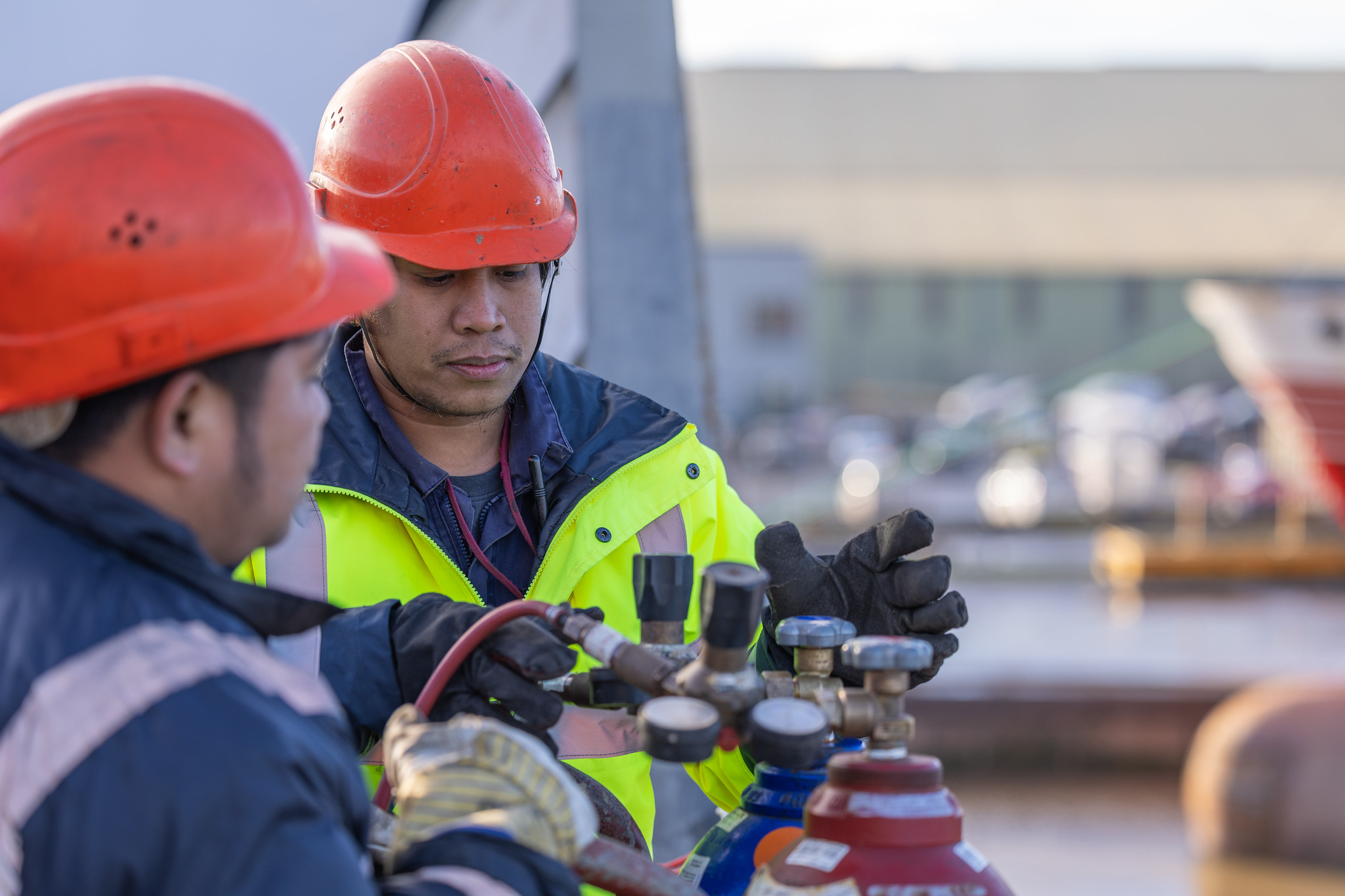
DB: Thank you very much for your time, Robert. It was great to learn more about the work of Stella Maris.
RA: Thank you, it all helps to spread the word, and I’m very pleased to be part of it.