


Citizens UK convened a conference for Catholic schools on 7 July in Westminster Cathedral Hall, the same place where two months before CSAN had hosted a symposium to launch our latest report, The Dignity of Workers in the 21st Century.
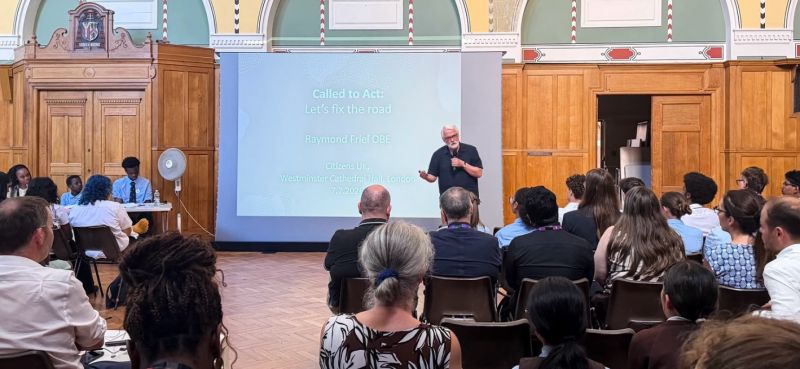
The conference featured Catholic schools from England and Wales who reported on campaigns for social justice in their communities, inspired by the methods of broad-based organising.
Schools from Cardiff, Tyne and Wear, London, Liverpool, Brighton and Hove, Manchester, Birmingham and Oxford presented on a range of campaigns including better housing, weaving trust in communities, safe routes to school, the living wage and affordable transport.
The keynote speaker on the day was CSAN’s CEO, Raymond Friel, who provided a reminder of the history of CST, rooted in the struggles for social justice in the industrial age. A key location for this struggle was the dockers’ strike of 1889, which took place not far from Westminster, in London’s east end.
The impasse between the dockers and the owners was negotiated by Cardinal Manning, himself from a wealthy business family, but as a prelate of the Church had the respect of the dockers, many of them from Ireland.
What the owners weren’t prepared for was Manning’s strong condemnation of their refusal to negotiate with the dockers and their demands for fairer pay and working conditions. This was not a private affair, as the owners claimed, but a “public evil”.
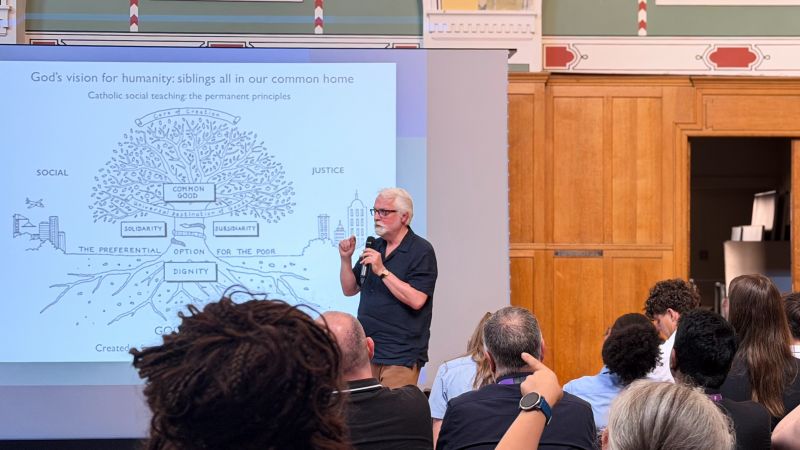
This direct engagement with the social and political order, which was also happening at the time across Europe, led to Pope Leo XIII writing the first social encyclical, Rerum Novarum, which took up the cause of workers whose dignity had been undermined by industrialisation.
If Catholic Social Teaching was the inspiration for the schools at the conference, then community organising was the means by which that inspiration was translated into concrete action for justice. At the heart of CST is the See-Judge-Act method, which encourages the faithful to see clearly what is going on in the light of the Gospel and to act accordingly to peacefully bring about a more just social order.
The problem has been that the Church has not always invested its time and talent in working out the “act” part of the cycle. In many countries, we don’t have a history of the Church being engaged in social action for systemic change, so we falter when it comes to knowing what to do beyond a compassionate response.
That is why the partnership between Catholic schools – and indeed many Catholic dioceses – and Citizens UK, is so fruitful. It provides Catholic communities with a toolkit for justice, an effective way to build relational power, understand power dynamics, and campaign for structural changes to improve lives and communities.
This report was written by Raymond Friel OBE, CEO of CSAN.
Photography by Siân Thomas-Cullinan, Director of Caritas Brentwood.