
In teaching us charity, the Gospel instructs us in the preferential respect due to the poor and the special situation they have in society: the more fortunate should renounce some of their rights so as to place their goods more generously at the service of others. Pope Paul VI, Octogesima Adveniens (1971), n.23.
How long have you volunteered with Caritas and why did you decide to get involved?
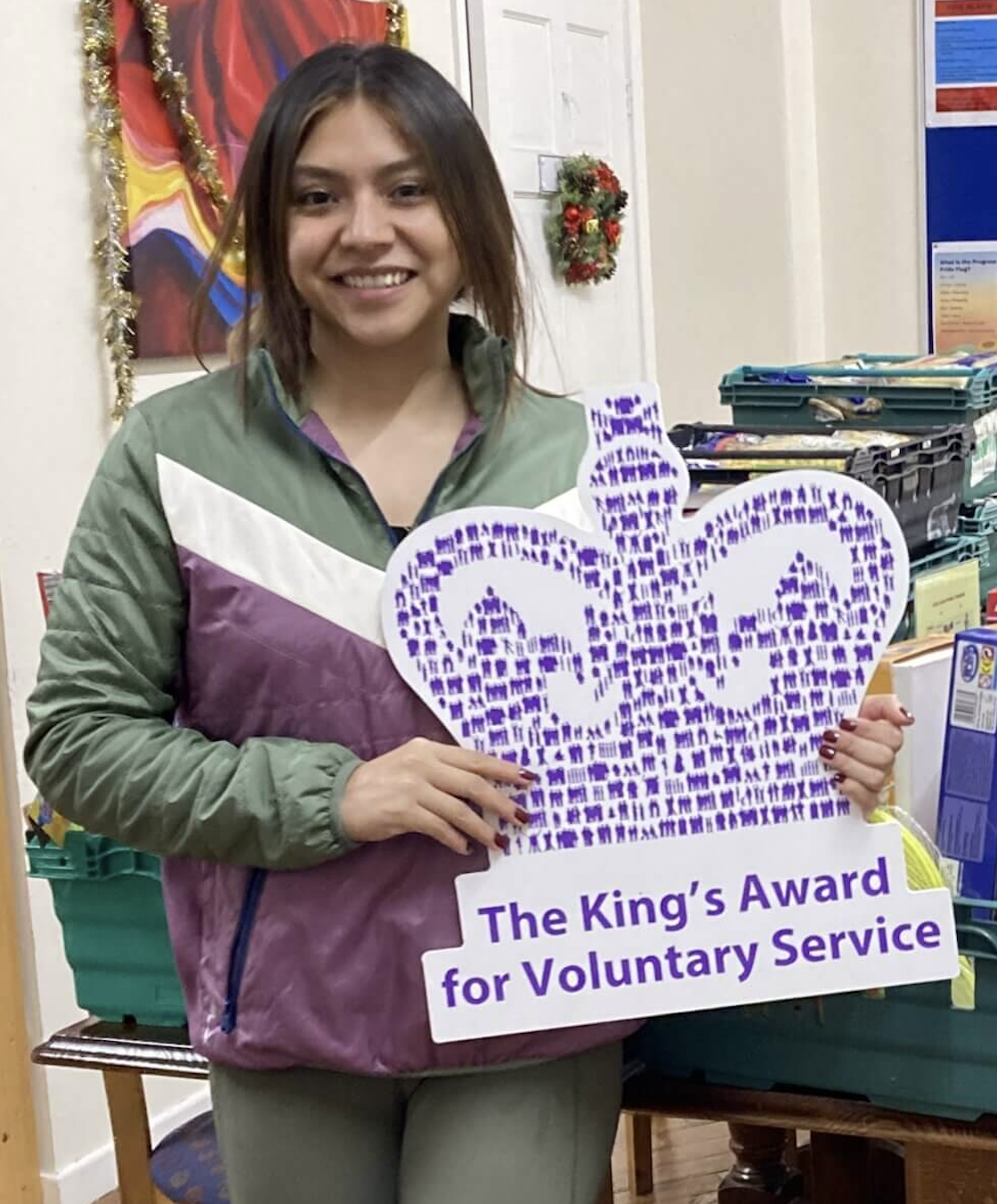
I started with Caritas in May 2023. I decided to get involved in Caritas, because I knew a little about Caritas International’s humanitarian work in my country El Salvador and in Spain as well. Now that I have been here as a volunteer for a while, I have learned more about the commitment and work that Caritas Salford does in Greater Manchester and Lancashire. That gives me more encouragement to continue contributing my time.
What’s the best thing about volunteering?
The best thing about volunteering is gaining work experience and developing new skills. At the same time, it makes a difference in the community by helping those in need.
What’s the best thing about your particular volunteering role?
At the food pantry, I enjoy talking to the other volunteers and people who come to the centre for help and giving them a warm smile. In the garden, I like to plant and watch the plants grow. It is wonderful!
Caritas is a charity. What is it like volunteering with a charitable organisation?
Volunteering at a charity can be an incredibly rewarding job. It offers opportunities to make a tangible difference in people’s lives. In addition, it contributes to the acquisition of new skills and personal and professional growth.
How would you sum up the difference your volunteering makes in a sentence?
To dedicate my free time to supporting the organisation and helping people in need, making my volunteer work tangible, creating a positive impact on people’s lives.
What would you say to other people think of starting to volunteer?
As a personal experience, I can say volunteering is a perfect way to develop and acquire skills. It has helped me connect with people in a rewarding way. If you are new to the UK like me, volunteering can also be a great way to improve your English skills. I encourage you to do it and leave your fears aside, because it is worth it!
Since 1946 Marriage Care has been tending to the needs of couples, both those preparing for marriage and those who have reached a tricky point in their relationship and are struggling with the hardship relationship poverty brings to family life.
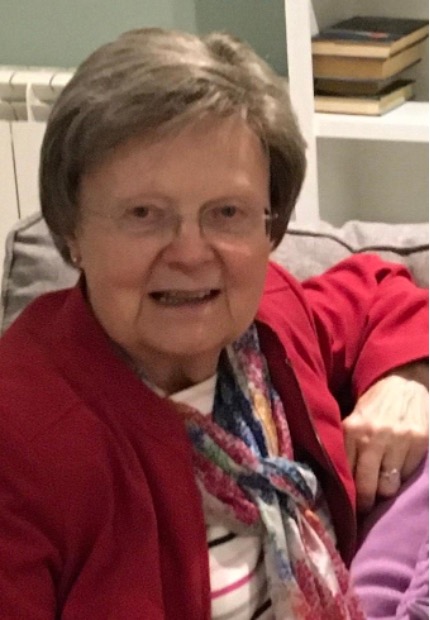
All our work is carried out by dedicated volunteers such as Teresa Weeks who has been counselling three couples a week, forty five weeks of the year, for over twenty-five years. As a deeply committed Catholic who has undertaken the thirty-day Ignatian spiritual exercises, Teresa’s spirituality and counsellor training has helped her to discern what couples may need to hear, and to grow in the knowledge and love of God.
Teresa became a counsellor when she’d been married for about 25 years. As so often happens as people enter middle age and children grow up, she and her husband had got stuck as a couple. But they knew it was really important that they try to make their marriage work and not just let it go. They went for counselling and found the counselling so helpful that Teresa decided to volunteer. There was a rigorous selection process, involving counsellors and psychologists, so Teresa was pleased when she was accepted. She had worried that the problems she experienced in her own marriage might make her unsuitable. She was pleased to find that the opposite was true as her own relationship journey helped her to understand better what others might be going through.
Volunteering for Marriage Care has become part of her life. She has supervision once a month and access to regular training to ensure professional standards are maintained in keeping with Marriage Care’s commitment to the ethical framework; a requirement of its membership of the British Association of Counsellors and Psychotherapists. For her, the volunteering is a marvellous part of her life and has fulfilled that desire to understand better how relationships work, how each of us develops as a human being made in God’s image and likeness and also to understand herself better.
The benefit to society of maintaining healthy, loving, and enduring relationships is huge because it reduces people’s stress and anxiety and it promotes peace and flourishing, especially for children. Nearly 50% of all 16-year-olds are not with both parents, which has a profound effect on them, so it’s not surprising that in 2022, 15-year-olds in the UK reported having the lowest life satisfaction in Europe compared with others in their age group. Children need a secure base and a good model of what a healthy relationship is.
Many couples on the verge of divorce say they would take a way back if they could find it, but they feel they’ve reached the end of the road. With help it is often possible to find a new way and get back to a loving relationship. Given a safe space where they can explore their issues and de-escalate the tension, they can start to listen and undo the negative patterns that they’ve got into.
Marriage Care’s counselling service is open to any individual or couple who needs support with relationships issues – Catholic or not, married or not. And the norm for couples attending our Marriage Preparation courses, which are designed for those marrying in the Catholic Church, is for one person to be Catholic, or from a Catholic background and the other not and as a result the courses offer an evangelisation process that builds bridges to faith through welcome and acceptance. Teresa believes that God is in all things and especially in the creation of loving relationships, therefore if we are working and supporting people in developing their relationships to be more loving that is of God.
As our work is undertaken by volunteers, we provide the lowest cost relationship counselling service, and we never turn anyone away if they can’t afford to pay.
Marriage Care needs more funds to recruit, train and support volunteer counsellors and supervisors so that couples get the help they need to find a way forward from their difficulties. As for Teresa, she says she will volunteer as long as she possibly can.
Sunday 17 November 2024 is the eighth World Day of the Poor, with the theme from the Book of Sirach, “The prayer of the poor rises up to God” (Sir 21:5). Pope Francis, in his message for the day, reminds us that this year is dedicated to prayer in anticipation of the Ordinary Jubilee of 2025. Christian hope, the theme of the Jubilee Year, is grounded in the certainty that our prayer reaches God’s presence; “not just any prayer but the prayer of the poor.”
The novena is offered as a way to help us to prayerfully encounter in scripture God’s constant care for those who are in various forms of poverty and to prompt in us a desire for more just relations in the community. The readings are not from the readings of the day (apart from Sunday 10 November). This is a separate devotional exercise. It can be prayed individually or in school or parish groups.
You will find more details of the diocesan Caritas agencies and independent charities that are members of Caritas Social Action Network on our website at www.csan.org.uk. These charities are engaged in different ways in tackling the causes of poverty, promoting justice and restoring dignity. You will find much inspiration from them as you continue to “do justice, and to love kindness, and to walk humbly with your God” (Micah 6:8).
At CSAN, we’ve been working with colleagues from the CES and CAFOD on Jubilee for Schools, which will launch on Friday 24 January 2025. Website in early stages: https://cafod.org.uk/jubilee-schools
24-26 January: Jubilee of World Day of Communications
We will host an online webinar for the comms officers of CSAN members to share plans for the year and help to facilitate an understanding of Jubilee, with particular reference to the dimension of social justice. We will work with the CBCEW comms team to coordinate with their plans.
8-9 March: Jubilee of World of Volunteering
An ideal opportunity to spotlight and celebrate the many thousands of volunteers in the CSAN membership, across the parishes and charitable organisations of England and Wales.
12-14 March: CSAN Leaders’ residential at St Katharine’s, London
An opportunity to gather and celebrate Jubilee, reflect on its legacy, enjoy social friendship, networking, inspiring speakers and helpful workshops. Liturgy led by Jo Boyce and CJM.
28-30 April: Jubilee of People with Disabilities
An opportunity to highlight the work of CSAN members such as the Catholic Disability Fellowship and bring new energy to resources in this area.
1-4 May: Jubilee of Workers
A proposal for a Commission on the Dignity of Work is in very early stages. This would be an ideal opportunity to launch such a commission and focus on a Living Wage campaign.
20 September: Jubilee of Justice
Mass in Liverpool led by Archbishop Malcolm McMahon confirmed for Saturday 20 September, the day of the Jubilee for Justice. A wonderful opportunity to celebrate the work for justice in England and Wales
5 October: Jubilee of Migrants
Building on our recent work in partnership with CBCEW on migration issues, we will plan for a special Jubilee World Day of Migrants and Refugees.
16 November: Jubilee of the Poor
In recent years, we have produced resources for World Day of the Poor, based on the theme for the year in the message from Pope Francis. We will develop those resources for this Jubilee.
3-5 December: Conference at St Mary’s University Twickenham, in association with St Mary’s and the Network for Researchers in Catholic Education to mark the 60th anniversary of Gaudium et Spes.
14 December: Jubilee of Prisoners
Working with CSAN members involved in the criminal justice system and our Criminal Justice Alliance, we will promote a Call to Action in parishes to highlight the needs of families caught up in the criminal justice system and the reintegration of people who leave prison.
‘Every person is created by God, loved and saved in Jesus Christ, and fulfils himself by creating a network of multiple relationships of love, justice and solidarity with other persons while he goes about his various activities in the world. Human activity, when it aims at promoting the integral dignity and vocation of the person, the quality of living conditions and the meeting in solidarity of peoples and nations, is in accordance with the plan of God’.
Social Compendium of the Church, 35
CSAN’s Caritas Academy is hosting a one-day course to study the basics of Catholic Social Teaching. In 1891, Pope Leo XIII released, Rerum Novarum, which is generally considered to be the first formal consolidation of the Church’s social teaching. Since then, each Pope has responded to the ‘social question’, that which asks, how we should live together and what that means for us personally. This teaching addresses the most pressing issues of our time in light of Scripture and tradition.
More specifically, the day will cover: • The Key Principles of Catholic social teaching • Catholic Social Action: Input and Engagement with Practitioners in the Caritas Social Action Network • Guidance on how to apply ‘See, Judge, Act’ methodology as promoted by Pope St John XXIII
The day will be led by Raymond Friel OBE, CEO of CSAN, with expert input from practitioners in the network. The seminar style approach will allow attendees to interact and engage with speakers to cement their understanding of this essential aspect of Catholic teaching and consider how it fits into the Catholic worldview more generally.
Tickets are available from Eventbrite at £75 per person. This fee includes lunch and course materials. The day will be held at the London Jesuit Centre, 114 Mount St, London, W1K 3AH.
For any queries, please contact Research and Programmes Officer, Bernadette Durcan, at bernadette.durcan@csan.org.uk.
Caritas Westminster hosted a day at Westminster Cathedral Hall on Thursday 20 April in partnership with other CSAN Members, St Vincent de Paul Society and the Irish Chaplaincy as well as Caritas Plymouth. The purpose of the event was to strengthen those accompanying senior members of our parish communities to continue the vital work they are engaging in, and to consider how their services could support greater numbers of those feeling distant from parish life. The impetus for such an event was in part responding to the synodal process which highlighted the need to include older people, as well as affirming dignity in seniority, and the need to generate ideas and (re-)introduce new programmes to parishes.
The day was bookended by prayer, with inputs from +McAleenan (Chairman of the Caritas Westminster Board) and +Mason (Bishop of the Forces). Bishop McAleenan reminded us of the association in the Scriptures of older people and wisdom, and the instances of God using older people to bring about his purposes (Genesis 5:5; Genesis 5:24; Genesis 22; 2 Kings 2:11; Luke 2:25-38). He suggested that old age was conceptualised too stereotypically and challenged listeners to attend to the nuances of this life stage. Rather than assuming old age is characterised by human and social inadequacy, Bishop McAleenan reminded us that the experiences and the lives of older people are as many and as diverse as the number of people themselves. The enemy of appreciation of those in later life stems from a mentality of efficiency which masks the social nature of humanity and as a result, risks harming our relationships with one another.
Bishop Mason concluded by affirming the Church’s distinct mission, which unlike an NGO, relies on the power of God to orient our best efforts to serve our fellow brothers and sisters and not reduce social action to mere ‘do-goodery’. Rather, by engaging in good works, we are responding to the God who loves us and fulfilling our baptismal calling to bring to Christ to others.
The conference’s keynote speaker was Debbie Thrower, Founder and Pioneer of Anna Chaplaincy. Anna Chaplaincy is an accompaniment service that specialises in caring for the emotional and spiritual needs of older citizens. In particular, Debbie stressed the urgency of the attending to the pastoral needs of those in later life in our parishes and local communities where society tends to overlook and explained how Anna Chaplaincy does this. She suggested that many older people are experiencing an identity crisis, resultant from a great reluctance to face our own senescence.
Meriel Woodward, Assistant Director of Caritas Westminster, said:
Collaborating with CSAN and other partners has been a very enriching experience. From feedback received, participants really enjoyed the event; most plan to take the learning back to their parish to either inform their current volunteering, or to help shape new activities or projects. There was an overwhelming desire for more opportunities to network and share ideas. We are really keen to ensure older people are involved in the life of their parishes, and will be circulating a full program of events for the remainder of 2023 shortly.
As Debbie Thrower reminded her audience, attending to the elderly is a blessing, a privilege, and a responsibility.
After 17 months of fundraising and renovations, and over £500,000 of investment, Tabor Living celebrated the transition of its services from a smaller site at St Anne’s, in Digbeth, where it has been based for five years to a new facility at St Catherine of Siena, Bristol Street in the centre of Birmingham. 9 new emergency bedrooms have been created as well as 10 ‘next-steps’ rooms to support those who are experiencing homelessness, this is doubling their existing provision.
Tabor Living is a collaborative project between a number of partners including Fr Hudson’s Care and the Archdiocese of Birmingham, who are both members of the CSAN network. Tabor Living are pleased to increase their accommodation and support offer to those experiencing homelessness in the city, they will also continue to operate their 3-bedroom move-on house, Tabor Cottage, nearby.
The launch on Wednesday 19 April saw Andy Street, West Midlands Mayor, officially open the new project alongside Archbishop Bernard Longley and the Tabor Living Project Manager, Sharon Fear. On Sunday 23 April, organisers also extended their celebrations with a Mass of Thanksgiving led by Archbishop Bernard Longley and offered supporters the opportunity to have a tour of the new building.
Sharon Fear explained why the initiative was timely: “One of the reasons we’ve looked at expanding and becoming bigger is because we’ve noticed that there are fewer options for people who are working, but who still need that support for the next move on – that’s where we can help.” She explained that the people they work with “tend to get overlooked because they’re functioning in some ways, but still need support and help”. Many of the guests at Tabor Living are migrants with restricted eligibility to public funds, who have to ensure they sustain themselves through employment.
Tabor Living has helped over 100 people since its initial launch in 2015, at a time when it was believed at least 200 people per night were sleeping without a roof over their head, within the city It has been reported that this number had peaked at 400 in the summer of 2021, according to Birmingham City Council records, following the cessation of the furlough scheme and the increased cost of living[1].
With a success rate estimated at 75%, Tabor Living expects this to increase with the launch of the new facilities. Archbishop Bernard reflected that they “are on the threshold of Tabor House in its new manifestation here. This is going to be a place of welcome for so many people.” Sharon Fear reflected that, “Tabor has always been about giving people their dignity back and working with them on what they want to achieve. We’re about so much more than just a bed – our volunteers and mentors work with our guests on an individual strength-based basis to support them to achieve their goals and move into more independent living.”
For leadership there is only one road: service. There is no other way. If you have many qualities — the ability to communicate, etc. — but you are not a servant, your leadership will fail, it is useless, it has not power to gather [people] together.
Address of Pope Francis to Rectors and Students of the Pontifical Colleges and Residences of Rome, 2014
In April, the directors of CSAN charities met together at CCLA offices. This was the first time CSAN members had gathered officially since the rebranding of the ‘Directors’ Forum’ into the ‘Leaders’ Alliance’. The Alliance facilitates leadership gatherings within the CSAN Network, allowing members to meet and collaborate on innovative solutions that can help them realise their goals.
Avril Baigent, representing the School of Synodality, delivered a keynote talk entitled ‘Synodality and the Social Mission of the Church’. The talk highlighted the application of the synodal process in Scripture, using New Testament accounts and the tradition of the early Church to act as a guide in the current deliberations of how the Church communicates the truth of the Gospel in the contemporary world. Avril also facilitated the space to have ‘spiritual conversations’ which prioritised listening over speaking, as an exercise to orient leaders towards leadership ultimately best exemplified in Jesus Christ (Philippians 2:1-1). Our conversations are most fruitful when we approach others with humility (recognising that we do not have all the answers), in freedom (to be open to what God might be teaching us), and with joy (the commitment to seeing God in all things and the resultant peace that follows from this).
The second keynote talk, ‘The Grace of Failing’ was delivered by Andy Keen-Downs, CEO of PACT. Guiding us through 3 examples from his career, Andy reflected on how occasions professional failure can allow us to grow. Speaking in the context of charity leadership, he suggested it is those we are called to serve that will remind us of our role and purpose and encouraged listeners to be intentional about building a team that helps fulfil the charity’s vision. Andy also shared details of a recent PACT project exploring the impact of parents’ incarceration on children and young adults. Responses from focus groups had been dramatized as a way to acknowledge and communicate young people’s experiences to wider audiences.
CSAN also expresses heartfelt thanks to Carol Hill, Director of Catholic Care (Diocese of Leeds), our outgoing Chair who has served in this position for many years, and also to CCLA for hosting CSAN for this event.
On Wednesday 10 May, I joined colleagues from CAFOD and Caritas Member Organisations from all over the world for the opening of the Caritas Internationalis General Assembly in the Synod Hall of the Pope Paul VI Audience Hall in the Vatican.
The 22nd General Assembly was opened by Cardinal Tagle, the outgoing President, who reminded us that Caritas Internationalis is a family with a common mission, namely to serve and accompany the poor, in whom we encounter our Lord Jesus Christ.
Cardinal Tagle reflected movingly on his eight years as President of Caritas Internationalis as another formation in being a missionary disciple. We need structures, of course, he told us, but more than that we need a ‘soul’, and the soul of Caritas is the love of God poured into our hearts by the Holy Spirit. This is what gives us strength to keep loving as a family when it gets difficult.
The previous six months for the Caritas family had indeed been difficult. In November 2022, the Holy See took the painful decision, following an investigation, to remove the leadership team at Caritas Internationalis. This was a great shock to everyone at the time, but it was stressed right from the beginning that there was no suggestion of financial impropriety or sexual misconduct. The report from the investigation focused on the culture of the leadership. A key role for the Assembly was to elect new leadership, which happened in subsequent days.
The following day, we had an audience with the Holy Father, Pope Francis. Almost 500 delegates from the Assembly filed into the magnificent setting of the Clementine Hall. We did not have to wait for long. Pope Francis was early and was greeted with warm applause. In his hands he held the script of his speech but he told us we could read that at any time and handed it to Cardinal Czerny beside him. He then spoke from the heart about Caritas and then spent the rest of the time greeting each person in the room individually. This illustrated the pastoral approach of Pope Francis: a culture of encounter and closeness, reality before ideas. The text of the Holy Father is, of course, very rich and inspiring and is well worth close study. You can find it here: https://www.vatican.va/content/francesco/en/speeches/2023/may/documents/20230511-caritas-internationalis.html
In the course of the next few days, we enjoyed many inspiring inputs from colleagues all over the world who witness to the love of God in their work with the suffering and vulnerable. We heard from colleagues in Ukraine, working with a population traumatised by war and displacement; colleagues from Sudan working in a volatile situation of conflict and food insecurity; colleagues in Nicaragua working in a context of societal violence and open hostility to the Church. In every case, the love of Christ urged then on (2 Corinthians 5:14).
We had had the ‘statutory’ duties of electing a new leadership team and we were delighted to hear that Archbishop Tarcisio Kikuchi, the Archbishop of Tokyo, was elected as the new President and Alistair Sutton, the Chief Executive of SCIAF, was elected as the new Secretary General. We also approved a new Strategic Framework which will give shape and direction to the work of the confederation moving forward. The vision is clear and compelling: “a just world, transformed to reflect God’s kingdom, where all people in our common home experience the love, compassion and fullness of life.”
This is the Gospel-inspired vision at the heart of Caritas Internationalis in all its expressions at international, national and local level. It is the vision at the heart of all Christians who work for a better world. For more information about Caritas Internationalis, especially the Together We programme to mobilise local communities of care, please visit: https://www.caritas.org/togetherwe/
By Jo Thompson, External Affairs Manager, women@thewell(CSAN member charity)
On 8 March 2022 we mark International Women’s Day with the theme “Gender equality today for a sustainable tomorrow”.
The definition of gender equality is, ‘the state in which access to rights and opportunities is unaffected by gender’.
It is important to keep in mind the collective hard work and commitment of women and men who work to rectify inequality, with faith that one day we will achieve true gender equality in the world and a fairer, more just society for women and girls. On International Women’s Day, we reflect on the incredible achievements of women and girls around the world, day after day, week after week, year after year, against all odds. As we emerge from a global pandemic, the full impact of which we have still to comprehend, the need for gender equality is at the forefront of many minds.
Trauma informed support and exit services such as women@thewell understand all too well the inequalities women face daily. Women entrapped in the sex trade shine a stark light on inequality faced by women, leading to disadvantage, exploitation and abuse.
Picture credit: Claudia Clare
In our daily support service provision, focusing on breaking down the barriers to exiting prostitution, gender equality is the beating heart of our organisation. Demanding more for women, a life to flourish and grow, with choices which come from a place of freedom instead of survival. Providing women with trauma informed advocacy and support to live a life free of exploitation, abuse and disadvantage. Overcoming each barrier levels the playing field and forms the building bricks to exit a life of oppression.
With a commitment to working towards full abolition of the sex trade, lobbying and campaigning for the introduction of legislation to protect women sold into prostitution and the wider sex trade remains high on the agenda for women@thewell. We believe that the only possible option to keep women safe and protected is by the introduction of a legal framework that sends a clear message – women are not saleable objects. In a world where prostitution exists, we will never achieve true gender equality. As Fiona Broadfoot, a survivor of internal human trafficking and prostitution says,
‘The UK needs to criminalise men who abuse women through prostitution because it is the demand creates the supply. Without demand from these men there would be no supply of vulnerable women and girls to be bought and sold.’
Experience delivering frontline services indicates strongly that the abolitionist model, alongside provision of holistic exiting services, is essential to break down barriers and enable women to exit prostitution. Shaping a society in which commercialised, one-sided sexual gratification has no place.
During the pandemic, women@thewell and Dr Pat Jones collaborated on a research paper listening to the voices of women entrapped in the sex trade, as well as some of the professional staff who provide support services. The resulting report is unusual in that it is not primarily focused on the facts of the women’s situations, but with how the women make sense of their lives. In particular, it reflects on what freedom means in their own lives and on issues such as safety, survival and solidarity. Listening to the women’s voices enabled an understanding of the damage done by prostitution as a tolerated social structure. The women’s voices are full of anguish, courage, resilience and morality. The report will launch during the sixty-sixth session of the Commission on the Status of Women taking place from 14 to 25 March 2022. More details will follow on our website.
The research had a dual aim – to listen to the women and amplify their insights and stories, while also bringing them into dialogue with Catholic Social Teaching, and theological and political ethics. The report touches lightly on how CST principles inform that dialogue, but also draws on valuable resources from social sciences and other sources.
These are among the women’s voices that society must listen to, in order to effect true progression and change leading to gender equality.
This International Women’s Day let us celebrate together the women we know, and the women we have yet to meet, in the knowledge that on a small or large scale they all achieve great feats.
The views expressed in this blog are not a statement of CSAN policy.
We use cookies to ensure that we give you the best experience on our website. If you continue to use this site we will assume that you are happy with it.
You must be logged in to post a comment.