
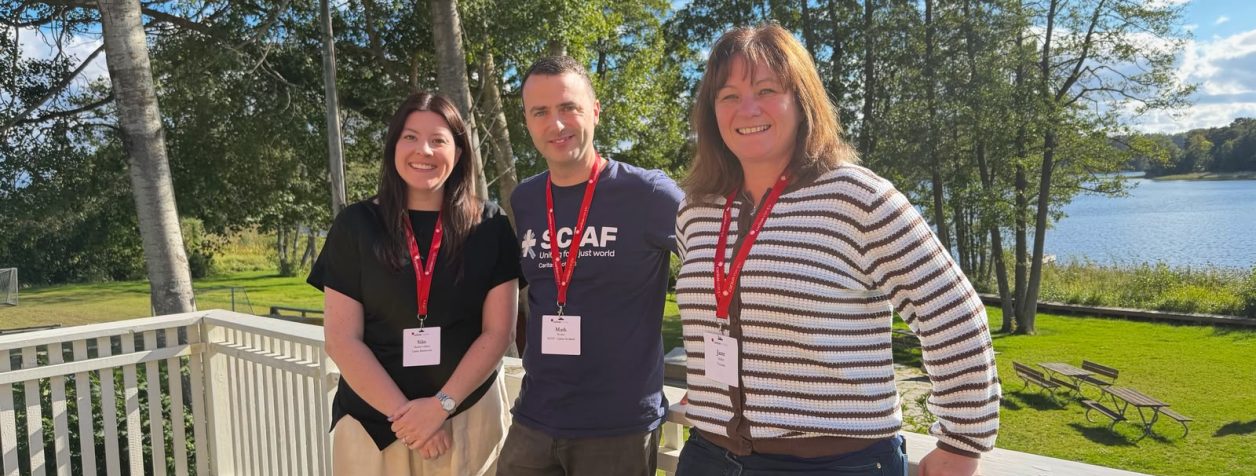
What does it take to turn Catholic Social Teaching from an abstract idea into a lived reality that a parish embodies in its everyday practice? This is the question that took me to Stockholm this month, where I represented CSAN at the Caritas Europa Parish Forum and was invited onto a panel to share our strategy for parish engagement here in the Diocese of Brentwood.
Msgr. Michael Landau and Maria Nyman opened the forum with the words: there is no Church without Caritas, and no Caritas without Church. In other words – charity isn’t some supplement to parish life; it is the very means by which the Church becomes concrete and visible in the community. In turn, this possibility depends on the presence of people who can listen carefully to the needs of their community and will pledge their time and talents to help transform their local parish family together.

Fr François Odinet developed this theme further, describing diakonia (the Church’s organised ministry of charity and service) as something every parish already possesses. He posed a question worth asking in every diocese: if parish communities are called to serve and attend to others’ needs, are we listening closely enough to understand those needs, or do we risk providing what was neither needed nor requested?
This question reminded me of the words of Pope Leo XIV in his latest encyclical, Magnifica Humanitas: “true progress always stems from a heart open to others, an intelligence willing to listen and a will that seeks what unites rather than what separates.” (15) Parishes flourish when different charisms work in a spirit of collaboration rather than competition. This begins with rethinking our relationship with people living in poverty: they are not passive recipients of aid, but people with agency whose experience and witness to the Gospel have something to teach the whole Church.
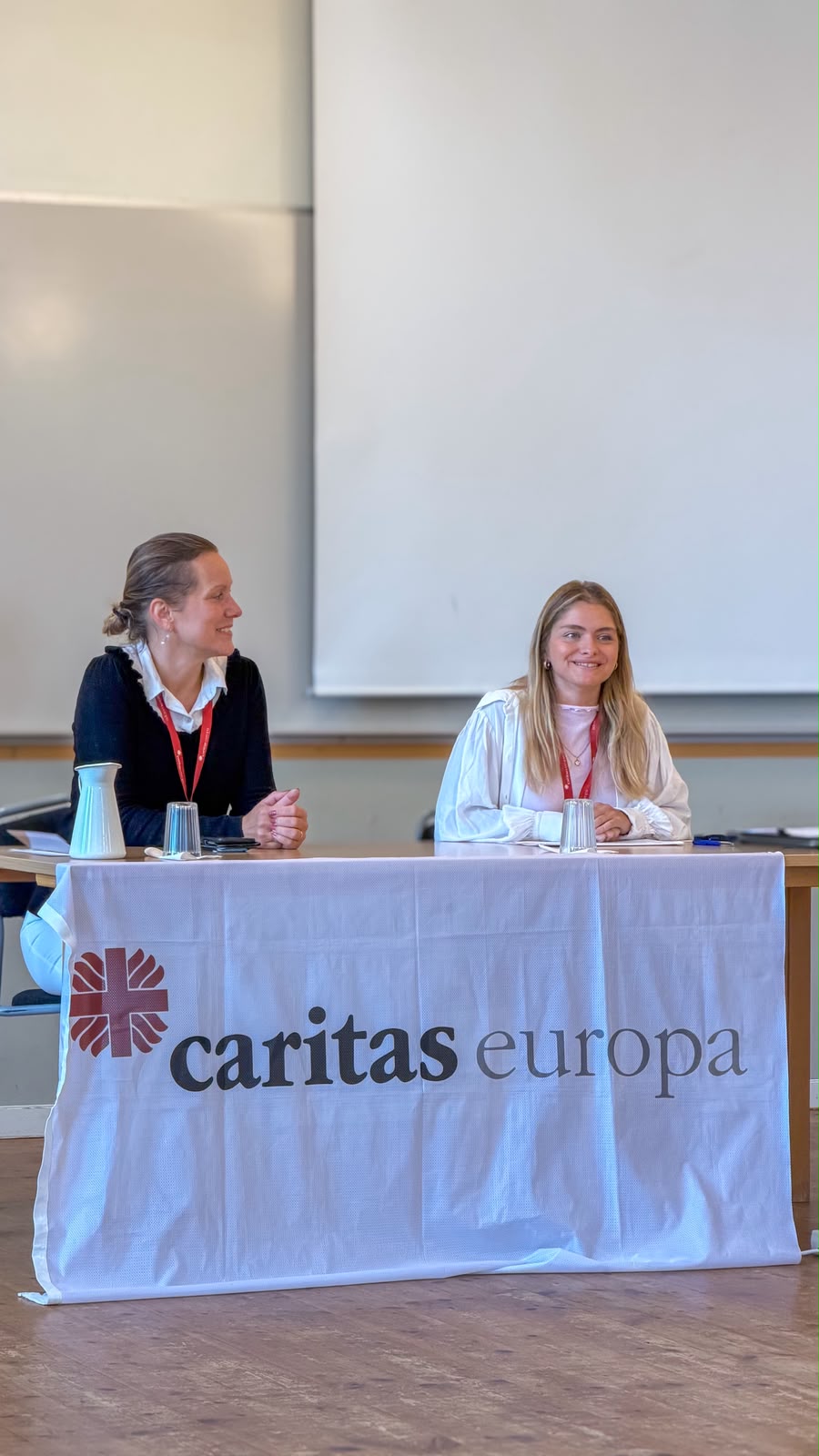
On the panel, I was asked how we translate Catholic Social Teaching into practice across our diocese. A few things came up that might help other diocesan leaders doing the same.
Catholic Social Teaching is already at the heart of much of what parishes do: organising a foodbank rota, visiting someone who is housebound or offering a listening ear. The first task is often to recognise, name and celebrate this work rather than immediately beginning something new. Formation is most effective when it starts with people’s lived experience and allows theology to illuminate what they have already encountered.
Ultimately, our task is to meet people wherever they are on life’s journey. Lay leadership develops in much the same way. Ownership and responsibility can enable a volunteer to become a leader, so people need meaningful opportunities to shape the work in which they participate (and sometimes from which they first benefited) alongside appropriate training. Young people, in particular, should be given a genuine voice and empowered to lead rather than included only as helpers. Some of the strongest lay leaders emerge beyond the usual committees, through schools, camps and volunteering programmes; pairing them with an experienced mentor can build confidence more effectively than instruction alone.
Agnieszka Zarzynska’s session translated these reflections into a practical framework for meaningful participation: think inclusively, listen carefully, ask rather than assume, share responsibility and communicate consistently. It offers a useful test for any team seeking to foster genuine involvement rather than simply recruit volunteers.

The clearest message I brought home from the forum is that Catholic Social Teaching takes flesh in relationships and in small, faithful actions sustained over time. Caritas is a worldwide family, present in almost every country, and belonging to that network reminds us that the work undertaken in our parishes and dioceses forms part of something much larger. It was inspiring to encounter the energy and creativity of dioceses across Europe as they responded to similar questions within very different contexts.
That brings me back to my opening question. Catholic Social Teaching is already present wherever a parish listens, welcomes, serves and enables people, including those experiencing poverty, to exercise their gifts and leadership. Caritas gives organised expression to this ministry of charity within the diocese, drawing attention to the work of organisations and communities that accompany people with humility and care. Our task is to recognise this work, name it, strengthen it and celebrate it. In doing so, we allow Catholic Social Teaching to become what it is meant to be: the Gospel lived together, made visible in the parish and shared with the wider community.
This article was kindly written by Siân Thomas-Cullinan, Director of Caritas Brentwood. Learn more about the work of Caritas Brentwood here.