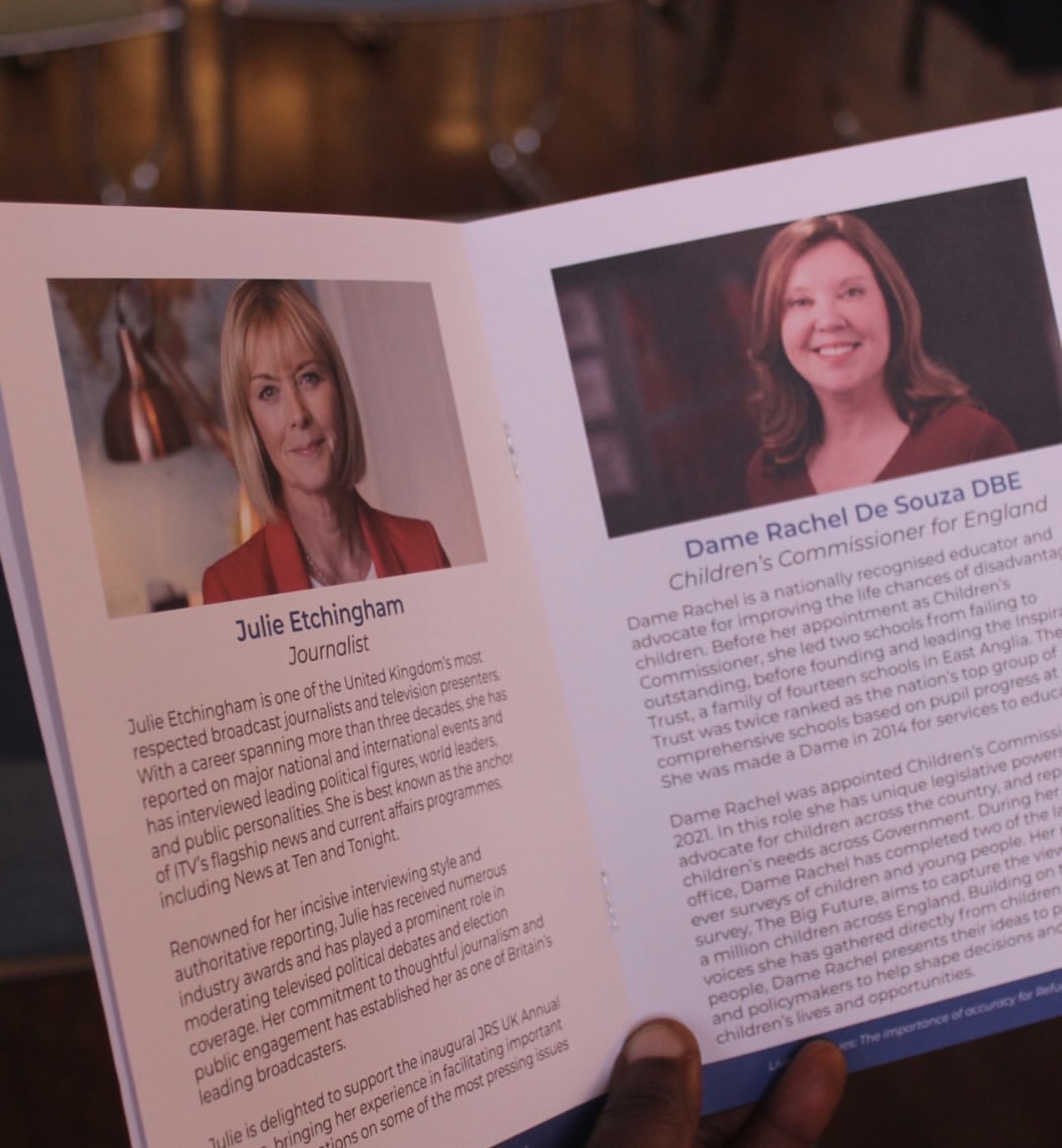

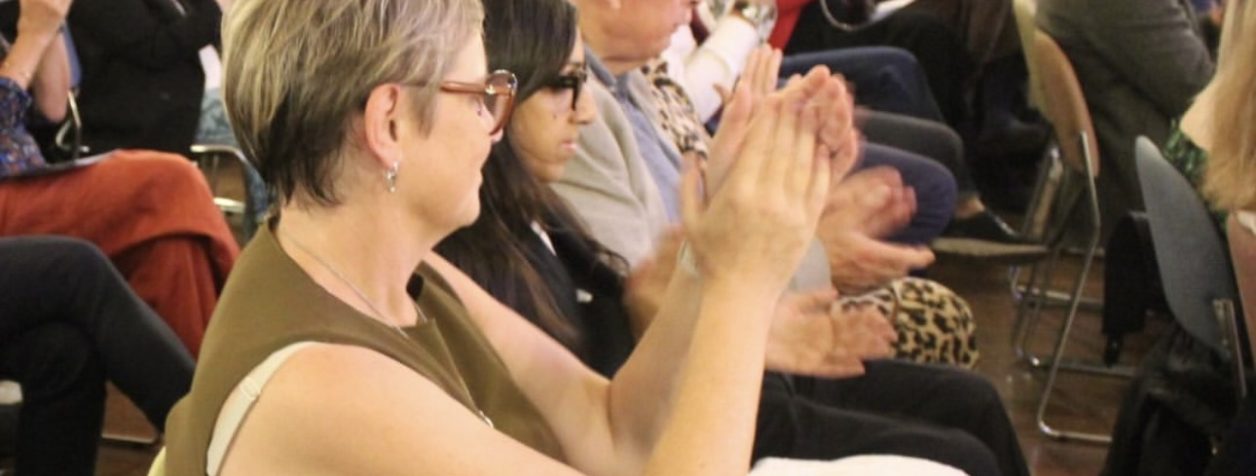
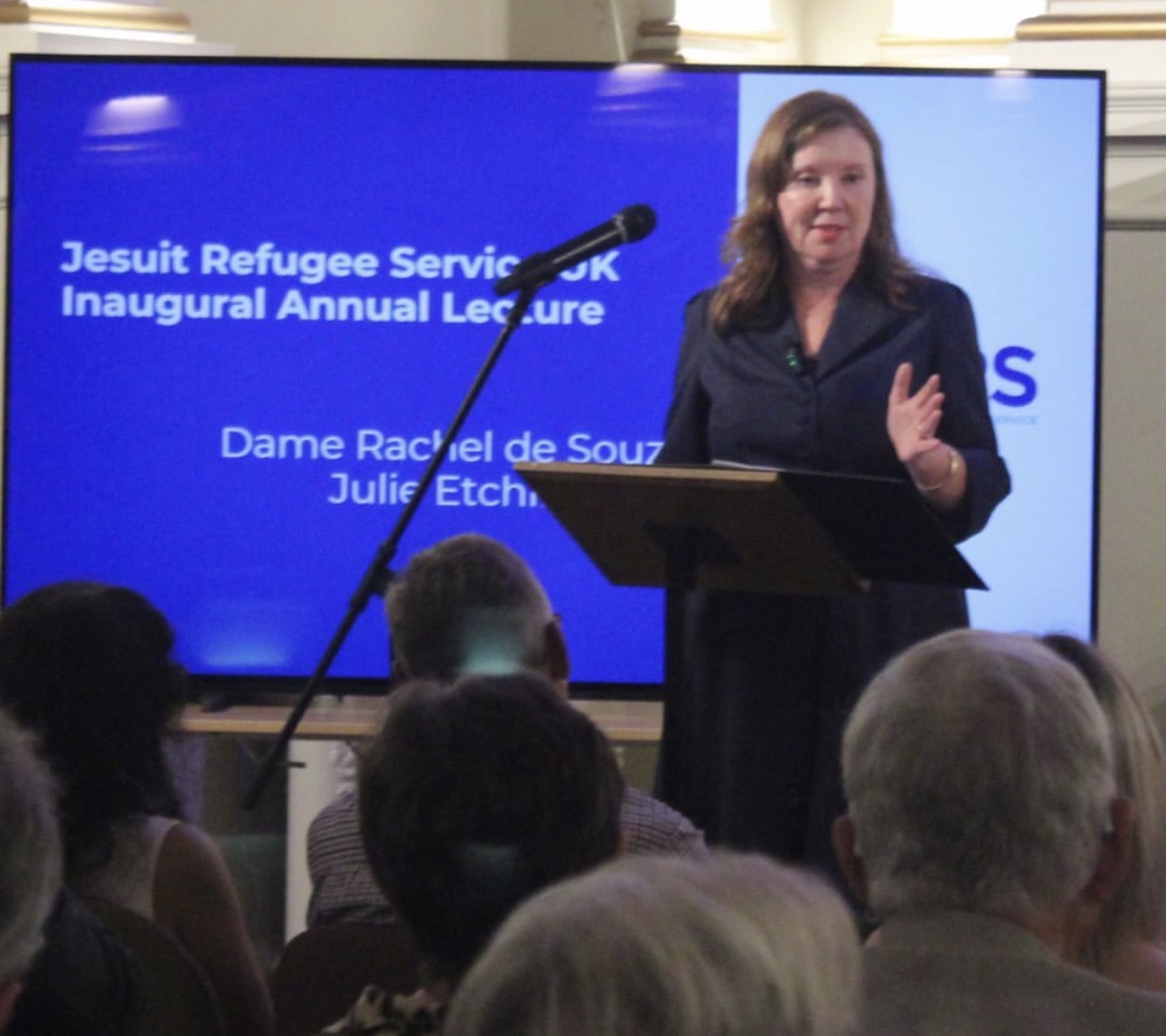
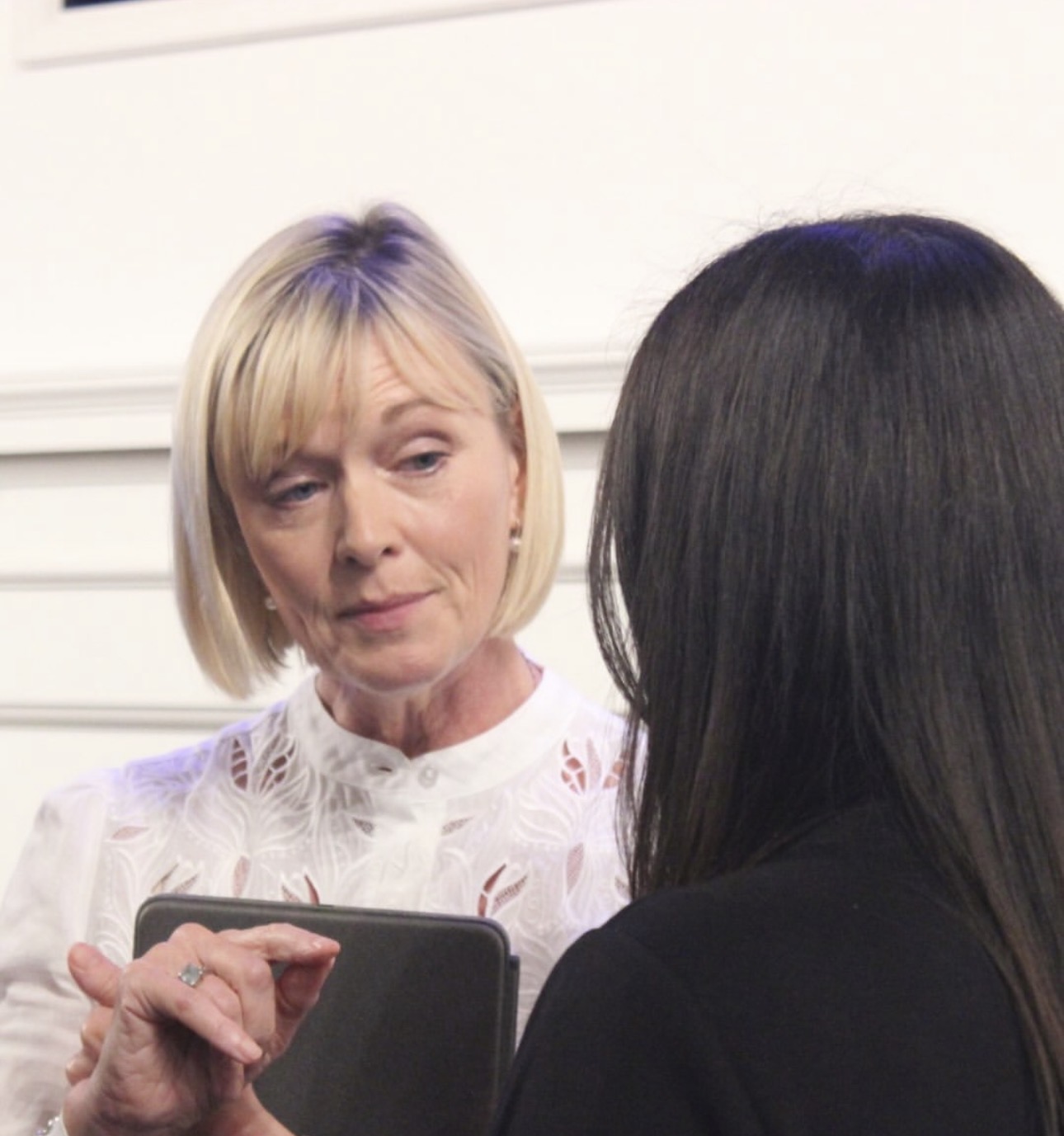
On Wednesday 23 September, members of the CSAN team and several others from across our network attended JRS UK’s inaugural lecture, given by the Children’s Commissioner for England, Dame Rachel de Souza. The event was hosted at the London Jesuit Centre, a beautiful nineteenth-century building in Mayfair, originally established in an area then marked by severe poverty and overcrowding, reflecting the Jesuit mission to accompany and serve people experiencing poverty, including migrants and refugees.
De Souza opened by reflecting on the Ignatian tradition of welcome, drawing on her Jesuit education and her own migrant heritage. She placed contemporary hostility towards migrants within a longer history of anti-migrant sentiment, highlighting how familiar prejudices and narratives continue to resurface.
Speaking powerfully, de Souza shared the experiences of refugee children she had met, including children who were unwell but placed in shipping-container accommodation rather than receiving hospital care. She also explained how her statutory powers allow her to request data and enter any site where there are children, including schools, immigration detention centres and hotels accommodating people seeking sanctuary. De Souza spoke candidly about using these powers to establish the facts and uphold children’s rights, including when faced with resistance from government ministers.
De Souza’s most urgent concern was the treatment of children seeking asylum whose age is disputed. Children who arrive in the UK seeking protection, often alone and following experiences of conflict, persecution, trafficking or dangerous journeys, are among the most vulnerable people within an already vulnerable population. Their vulnerability demands particularly robust legal safeguards and a presumption towards protection.
Where reliable documentary evidence is unavailable, an age assessment may be used to decide whether someone who says they are under 18 should be treated as a child. This is separate from the determination of their asylum claim: it establishes whether they are entitled to child-specific care, accommodation and legal protections. De Souza highlighted that, during the latest six-month period, 1,897 people were initially assessed as adults, but 442 of those decisions were subsequently overturned – at least 23 per cent, with hundreds of cases still unresolved. In other words, a later assessment or challenge found that almost one in four of those initially classified as adults should instead have been recognised and treated as children.
The consequences of an incorrect assessment are far from merely administrative. A child wrongly classified as an adult may lose access to local-authority care, child-appropriate accommodation, specialist support and procedural safeguards, and may be placed in adult accommodation or even detained alongside adults. De Souza argued that such a high error rate represents a serious safeguarding concern.
She also criticised provisions in the Immigration and Asylum Bill that would narrow how Article 8 of the European Convention on Human Rights (the right to respect for private and family life) is applied in immigration cases. In response, she drew upon Saint John Paul II’s teaching: “As the family goes, so goes the nation, and so goes the whole world in which we live.”
De Souza closed with a clear call to action for faith communities and the charitable sector: “We’ve got to speak openly and with clarity about what we see in front of us,” holding fast to hope while demonstrating “political courage”. Her challenge resonates strongly with CSAN’s mission to raise a prophetic voice in the public arena, speaking truthfully about injustice, defending the dignity of people whose voices are too often unheard, and calling those in power to place the common good at the heart of public life. We are grateful to our friends at JRS UK for convening this timely and important lecture.
Learn more at JRSUK.