

Reflections on CSAN’s experience of The Goodness Metric®
One of the things I have come to appreciate during my time working in the charitable sector is just how deeply motivated people are by the desire to make a positive difference in the lives of others. We are, in many respects, a sector of doers. There is always another project to deliver, another campaign to organise, another meeting to attend or another pressing social need that demands our attention. Much of this work is immensely valuable, and the commitment of those involved in it is something I continue to admire. Yet I have also become increasingly conscious of how easily we can find ourselves caught up in the momentum of our own activity, moving from one piece of work to the next without always finding sufficient time to consider what we are learning along the way, or to reflect on the wider transformations we are ultimately seeking to bring about.
This was one of my most significant reflections following the participation of Caritas Social Action Network (CSAN) in The Goodness Metric®, a framework developed by The Do Good Charity in partnership with Nottingham Trent University to help charities understand, measure and articulate their social impact.
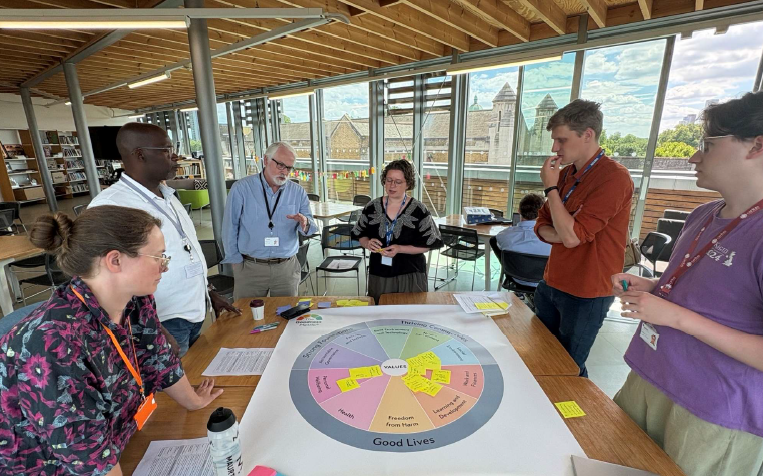
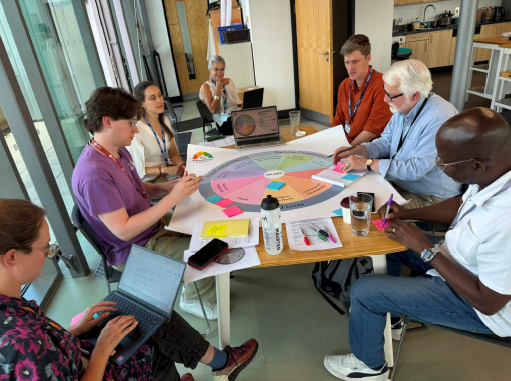
Over the course of several sessions, our team was invited to reflect on the work we undertake, the people and organisations we support, and the changes we hope to bring about through our activities. I found the experience particularly valuable because it created an opportunity for us to examine our work together, to make connections which might otherwise have remained implicit, and to consider some of the assumptions that underpin our understanding of the difference we make.
Perhaps the most helpful insight for me was the distinction between outputs and outcomes. It sounds remarkably straightforward when expressed in these terms. Outputs concern the things we do, whether organising events, delivering programmes, producing resources or engaging with our members. Outcomes concern the changes which arise from these activities, including the ways in which people’s knowledge, confidence, circumstances or capacity to act might be improved. Yet I found that thinking about our work in these terms encouraged me to approach some familiar activities with a different set of questions. Why are we undertaking this particular piece of work? What do we hope will change as a consequence? How might we recognise that change when it happens? And what can we learn from the experience that might help us improve what we do in the future? These questions have stayed with me since the workshops, and I suspect they will continue to shape the way I approach my own work.
There is something particularly valuable, I think, about recovering the space for this kind of reflection within organisations that are so naturally oriented towards action. Those working in charities are often responding to circumstances of considerable urgency, and it is understandable that the immediate demands of delivery can occupy so much of our attention. Over time, however, I wonder whether this can contribute to a certain suspicion of activities which seem more intellectual or contemplative in character. Thinking, analysing, evaluating, discussing and writing can sometimes feel rather removed from the practical business of helping people. My experience of The Goodness Metric®, has encouraged me to think more seriously about the relationship between these different dimensions of our work, and about the ways in which they might enrich one another. Our practical experiences provide an extraordinary wealth of material for reflection, while reflection can deepen our understanding of those experiences and help us act with greater wisdom and intentionality.
Of course, there are important structural questions here too. We work in a sector that is frequently expected to respond to some of the most complex and entrenched problems facing our society, often with remarkably limited resources. Many charities are supporting people experiencing poverty, homelessness, domestic abuse, social exclusion and other forms of profound vulnerability, while navigating considerable financial uncertainty and pressure on their own organisational capacity. In these circumstances, it is hardly surprising that evaluation, research and impact measurement can sometimes feel like additional demands on an already overstretched workforce. The language of metrics and reporting can easily become associated with another obligation to fulfil, particularly when it is driven by external requirements. I think we need to take seriously the conditions which would allow charities to engage meaningfully in processes of reflection and learning, and to recognise the value of properly resourcing this work. There is enormous potential in creating the time and space for people to think deeply about the challenges they encounter and the effectiveness of their responses. That potential deserves to be taken seriously by funders, policymakers and the wider society which benefits so greatly from the work of the charitable sector.
Another particularly illuminating aspect of The Goodness Metric® was the opportunity to consider what the report describes as the ripple effects of our work. As a national membership organisation, CSAN occupies a somewhat distinctive position within the landscape of Catholic social action in England and Wales. Much of our activity is concerned with supporting, connecting, forming and animating our network of member organisations, whose own work reaches people experiencing a wide variety of forms of poverty, marginalisation and disadvantage. During the workshops, we explored the ways in which our activities might strengthen the knowledge, confidence, relationships and effectiveness of those within our network, and how these changes might subsequently influence the work they undertake in their own communities. I found it immensely helpful to see these relationships mapped out more concretely. It gave me a stronger appreciation of the interconnectedness of our work and of the ways in which our contribution to social change is often mediated through the organisations and people we support.
For me, there is also a distinctly theological dimension to this insight. One of the aspirations of Catholic Social Teaching is the building of what Pope Paul VI and subsequent popes have described as a civilisation of love, a society shaped by solidarity, justice, human dignity and a commitment to the common good. This is an extraordinarily ambitious vision, and it can sometimes be difficult to appreciate how the ordinary activities of a relatively small national charity contribute towards its realisation. Reflecting on the ripple effects of our work helped me see these connections with greater clarity. When we bring people together, support their formation, strengthen their organisations or create opportunities for collective action, we are contributing in tangible ways to the conditions in which this wider vision might gradually be realised. I found that a genuinely encouraging discovery, and one which has helped me appreciate the significance of some of the less immediately visible aspects of our work.
The process also prompted me to think about how we communicate the vision which animates Catholic social action. Catholic Social Teaching offers a remarkably rich and integrated understanding of the human person, of our responsibilities towards one another, and of the social and economic conditions necessary for people and communities to flourish. Although it has developed within the Catholic theological tradition, its insights speak to concerns shared by people of many different faiths and none. Indeed, I have often found that when people encounter its principles, they recognise something deeply compelling and liberating within them. There is, I think, an important opportunity for organisations such as CSAN to make this tradition more accessible, communicating its ideas in ways that resonate with the experiences and aspirations of people beyond the Church. The Goodness Metric® has encouraged me to consider how we might better articulate the connections between our values, the work we undertake and the changes we seek to bring about, particularly when engaging with those who may be less familiar with the language of Catholic Social Teaching.
Looking ahead, I am especially encouraged by the opportunities this process has created for further reflection within our own team. I hope that we will be able to build The Goodness Metric® by making space for a more sustained period of collective learning, during which we can revisit our experiences, consider what has worked well, explore what might be improved and develop a clearer understanding of the outcomes towards which we are working. There is something potentially restorative about this kind of shared reflection, particularly for a team accustomed to the demands of operational delivery. I would love to see us create opportunities to discuss our work openly and generously, with a spirit of curiosity and mutual encouragement, recognising the challenges we have navigated together and allowing new ideas and insights to emerge naturally through conversation. This can be an opportunity for each of us to grow in confidence and understanding, and to deepen our sense of shared purpose.
I came away from The Goodness Metric® with a renewed appreciation of the importance of creating space to think. There is, after all, a great deal of wisdom to be found in our collective experiences, provided we are willing to give them the attention they deserve. I hope that the process will continue to bear fruit for CSAN and, perhaps in time, for the wider network of Catholic charities with whom we work. More broadly, I hope it might contribute to a growing appreciation across the charitable sector of the value of reflection, evaluation and shared learning. The challenges confronting our society are profound, and the commitment of those working to address them is an extraordinary resource. Giving that commitment the time, space and support it needs to reflect upon its own experience seems to me an important part of helping it flourish.
This article was written by David, CSAN’s Communications and Programmes Officer