

Content Warning: Mentions of Abuse.
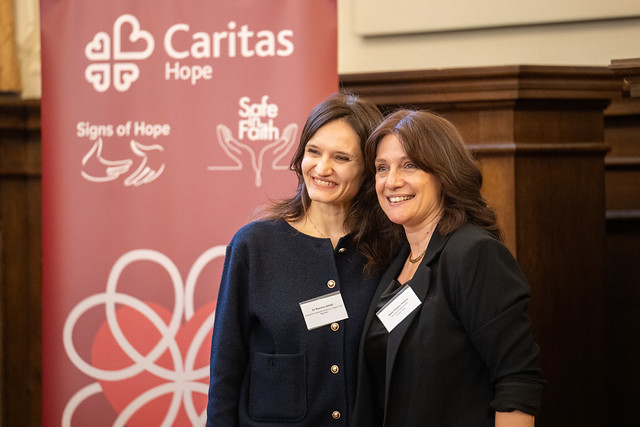
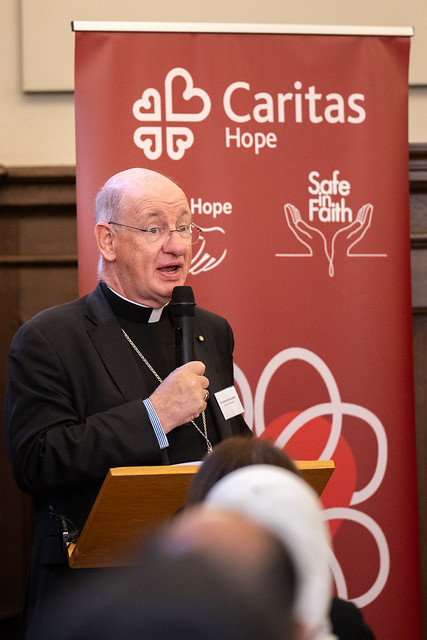
On Friday 2 October, I had the opportunity to attend the launch for Caritas Hope, a project by Caritas Westminster which brings together two of their services, Signs of Hope and Safe in Faith. The event was hosted in the London Jesuit Centre and was opened by the Archbishop of Westminster, Richard Moth.
Signs of Hope was one of the first British Sign Language (BSL) counselling services in the UK, supporting Deaf, Deafblind and Hard of Hearing people in Westminster. Deaf psychologists and therapists Aaron Makepeace and Victoria Nelson led the panel, chaired by founder of Caritas Hope, Nikki Dhillon-Keane. As someone who isn’t Deaf, I was really struck by the importance of Deaf-centred and Deaf-led forms of therapy, rather than forcing adaptation to the hearing world.
The panel from Safe in Faith featured representatives from the domestic abuse sector, including the Faith and VAWG Coalition and the Black Church Domestic Abuse Forum. The initiative was set up after recognising that people of faith are statistically more likely to stay for longer in abusive relationships. Romina Istratii spoke powerfully by addressing the question of structural challenges, and the need for multi-stakeholder engagement. She highlighted how action is necessary across all levels of our faith communities to establish strong support mechanisms for people in abusive relationships or living with Deafness.
As CSAN, we seek to mobilise Catholics across England and Wales to make a difference in our communities for social justice, and to influence public policy. The Bible encourages us to ‘accept one another, just as Christ accepted you’ (Romans 15:7) and to love our neighbour. Caritas Hope provides a great model for engaging people with lived experience, and following our call to be welcoming, accepting churches.
It was wonderful to learn more about the work of Caritas Hope, and support those involved in these crucial projects.
If you are or have been affected by the issues mentioned in this article, you can call the National Domestic Abuse Helpline on 0808 2000 247
This article was written by Erica, our Policy and Public Affairs Officer (Maternity Cover).