
Medaille Trust is marking its 20th anniversary with a powerful new initiative: a travelling Art Roadshow created with survivors of modern slavery. The exhibition combines visual art, sculpture and written reflections to tell stories of trauma, resilience and hope, challenging public perceptions and inviting deeper solidarity.
I spoke to Allys Brown and Francine Ihenacho about the vision behind the Roadshow, how survivors have shaped it, and why this kind of work is urgently needed in the current climate.
David Byrne: What inspired the Art Roadshow? What did you hope it would achieve?
Allys Brown: This year is 20 years of Medaille Trust, and we wanted to do something that would both honour that journey and centre the voices of survivors.
We began with a deliberately open brief. We knew we didn’t want an exhibition that was retraumatising or that focused only on the worst moments of people’s experiences. Instead, we invited the survivors we support to share:
- any part of their story they felt comfortable expressing
- messages they wanted the public to hear
- their sense of hope for the future
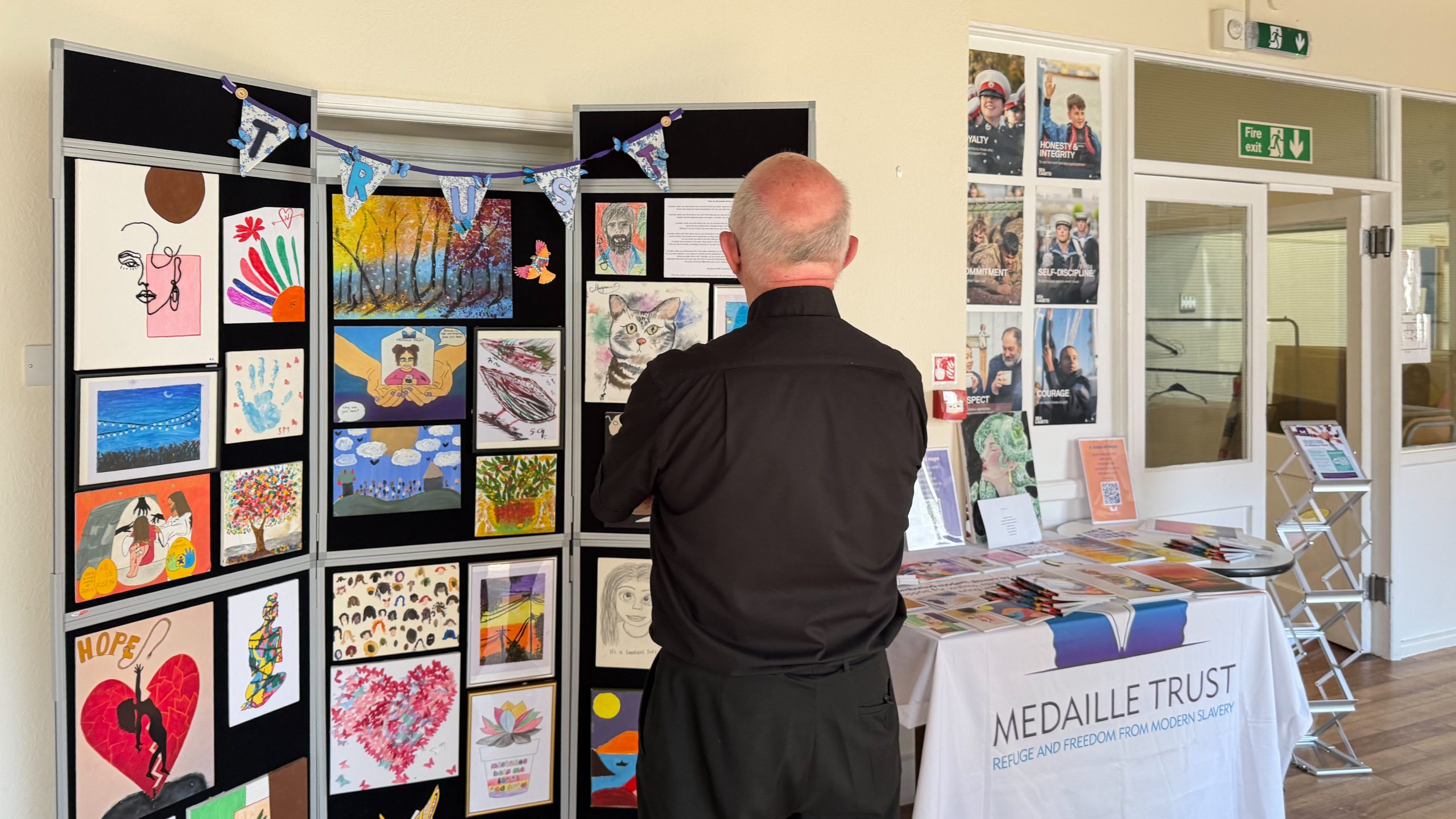
We weren’t prescriptive about content or medium. The priority was to make sure they felt safe and in control of what they shared.
We also had several wider aims:
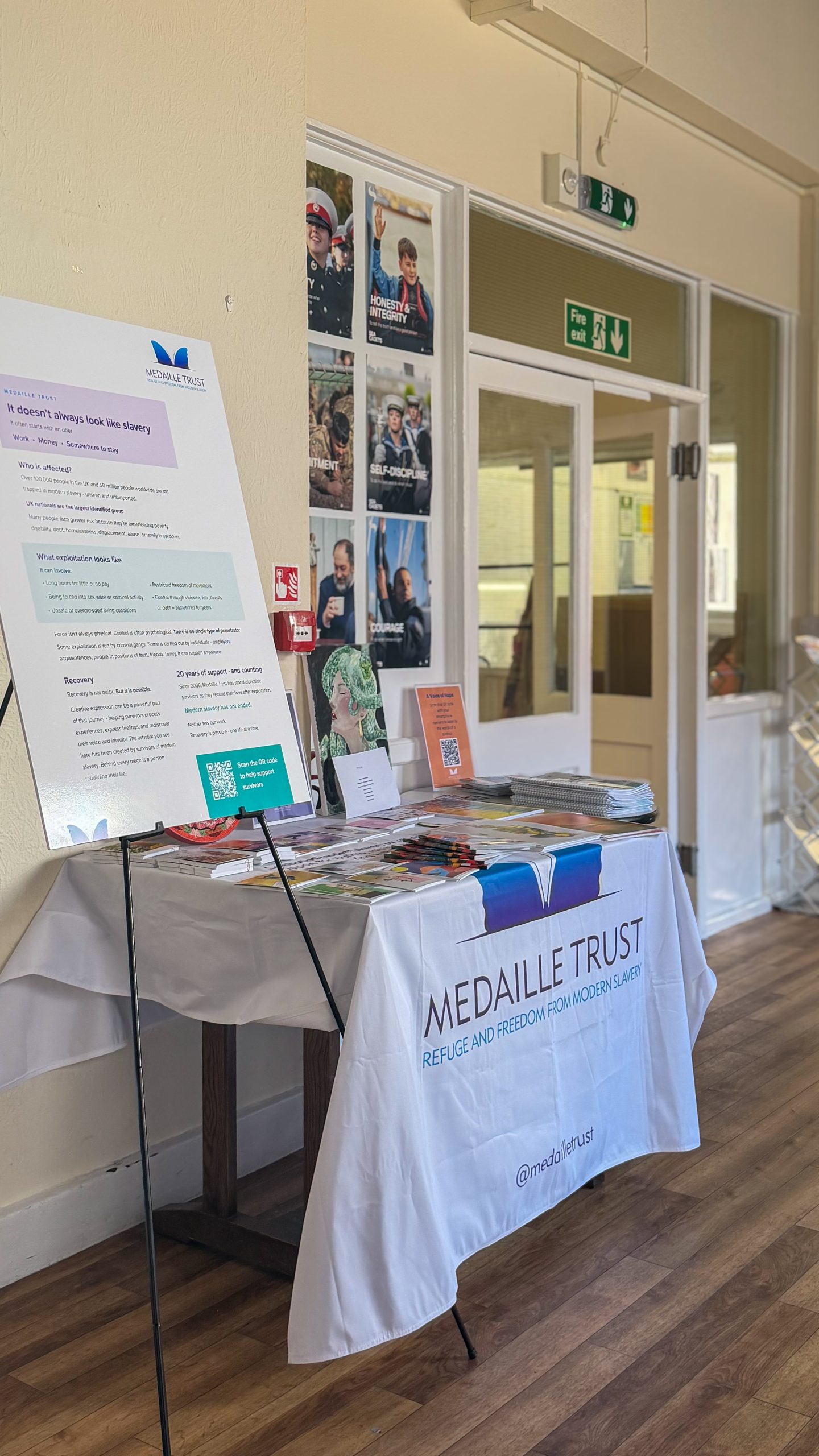
- To raise awareness of what modern slavery looks like in the UK today.
- To challenge stereotypes and stigma, especially where modern slavery is reduced to an immigration talking point.
- To educate the public about the realities of exploitation and the long journey of recovery.
- To show where Medaille Trust is now, 20 years on from a small project supporting women exploited in on-street prostitution in Southampton, to a much broader network of services and safe houses.
We honestly didn’t know what would emerge, but the artworks and stories that have come back are incredibly powerful.
David Byrne: How have survivors experienced taking part in the project?
Allys Brown: One case study in particular has stayed with me. A woman we support told us she had always loved art, but her family never allowed her to pursue it. When she was trafficked, even that limited freedom was taken away; art simply disappeared from her life.
Through this project, she told us that art has helped her find her voice again.
For us, that goes to the heart of why this matters. It’s not just an “awareness-raising initiative”; it is part of trauma recovery. Survivors are using creativity to process what they’ve been through, and to speak in ways that feel true to them and not defined by official forms or interviews.
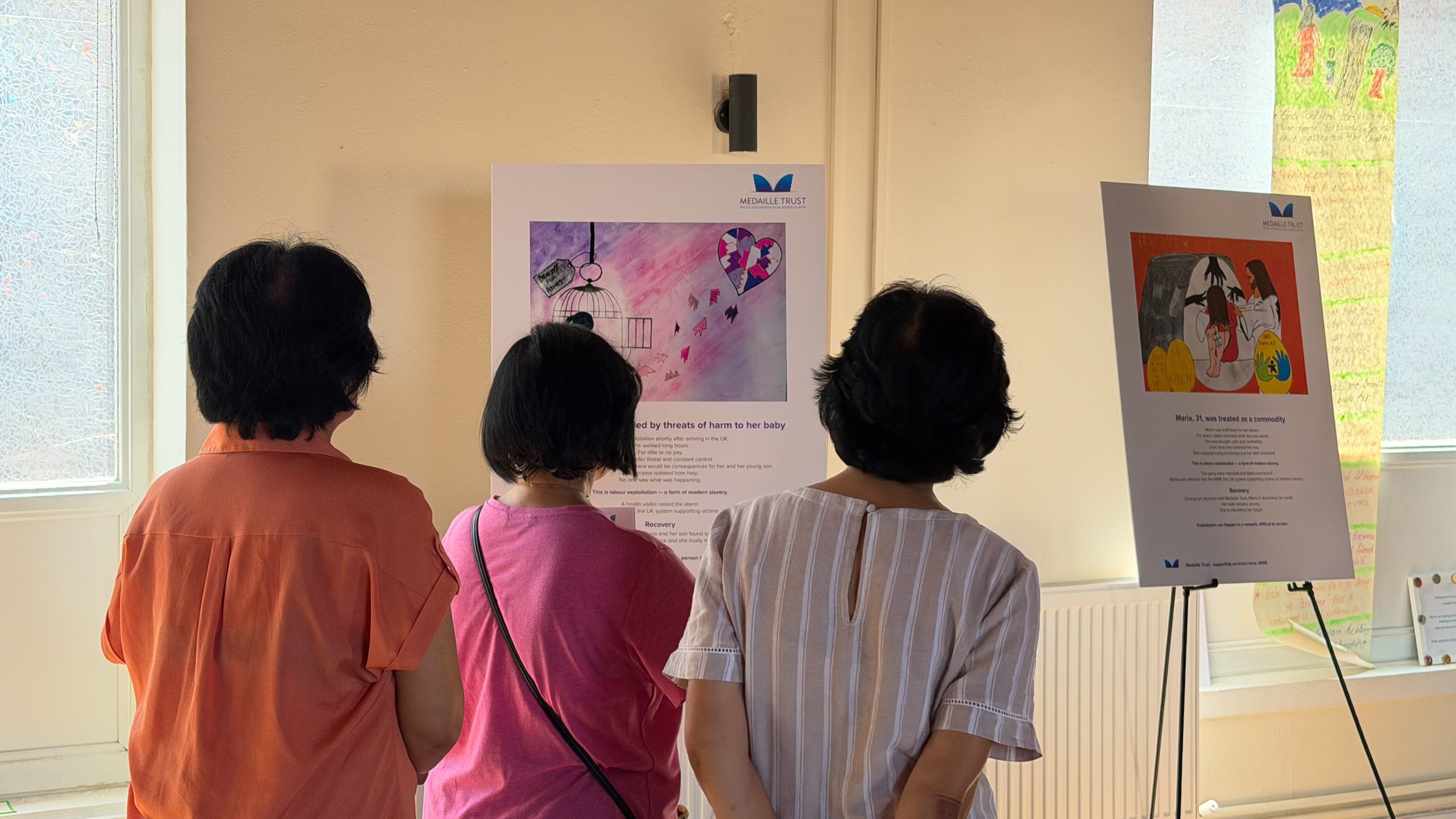
We’ve seen that for many, the act of creating and seeing their work displayed respectfully and publicly is deeply affirming of their dignity.
David Byrne: What impact is the Roadshow having on people who visit?
Francine Ihenacho: At one recent stop, I spent a lot of time talking to visitors as they moved through the exhibition. Again and again, people said that the Roadshow had made the idea of modern slavery “real” for them.
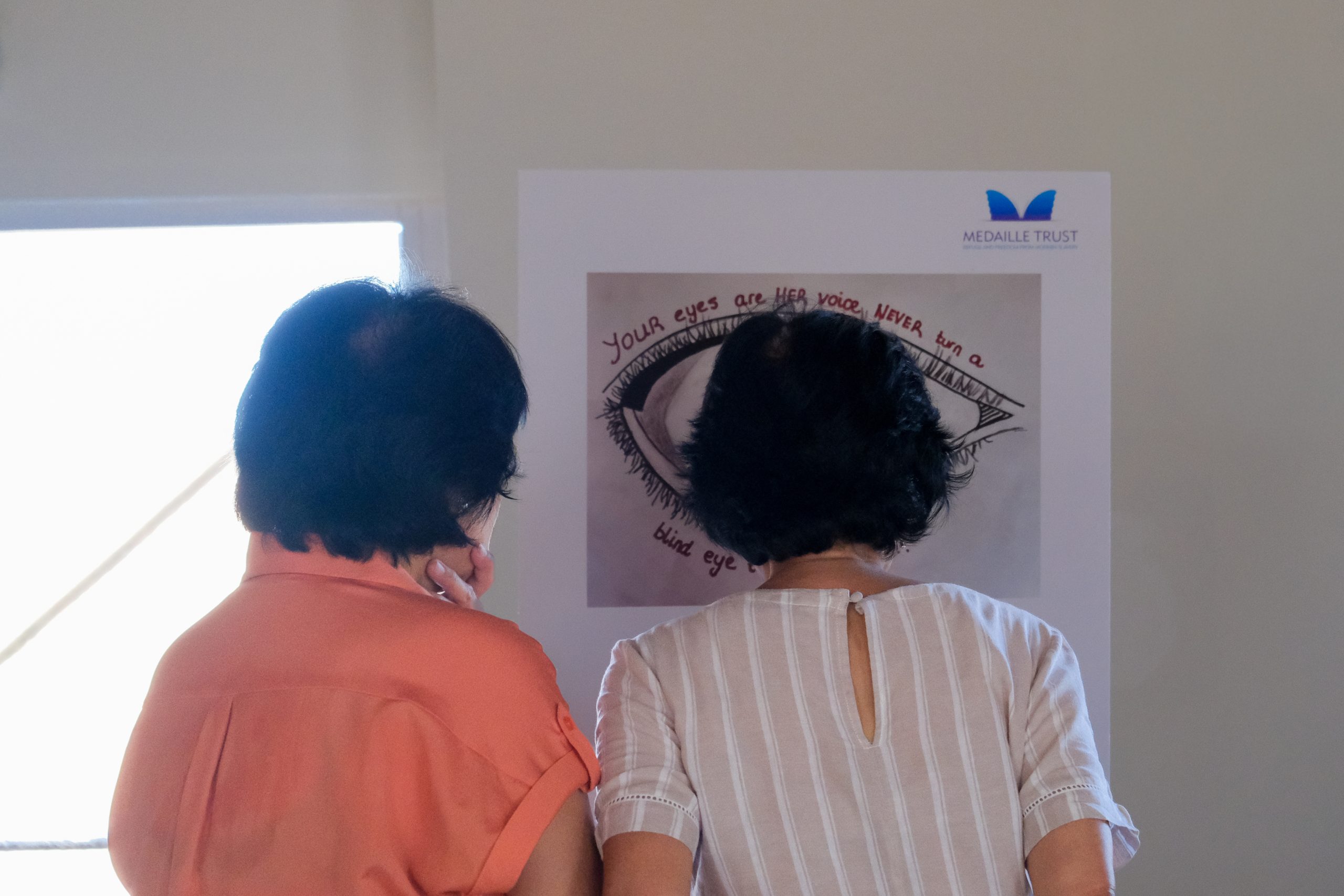
Most had heard the term before; some knew a little from news reports. But for many, it had remained quite abstract. Standing in front of the artworks, reading the accompanying text, seeing the colours, shapes and symbols survivors chose, they were suddenly confronted with the lived reality behind those headlines.
A number of visitors admitted they were moved to tears. They weren’t just learning “new information”; they were encountering the humanity of survivors in a very immediate way.
Art can be abstract, but in this context its very rawness is what cuts through. It bypasses some of the defensiveness and distance people can feel when confronted with statistics or political arguments, and invites them to respond at the level of empathy and relationship.
Allys Brown: Even for those of us who have worked in the sector for a long time, the impact is real. I’ve been working around modern slavery for about a decade. I “know” the stories, the numbers, the policy debates. But standing in front of pieces that survivors created with total freedom of expression is still deeply affecting.
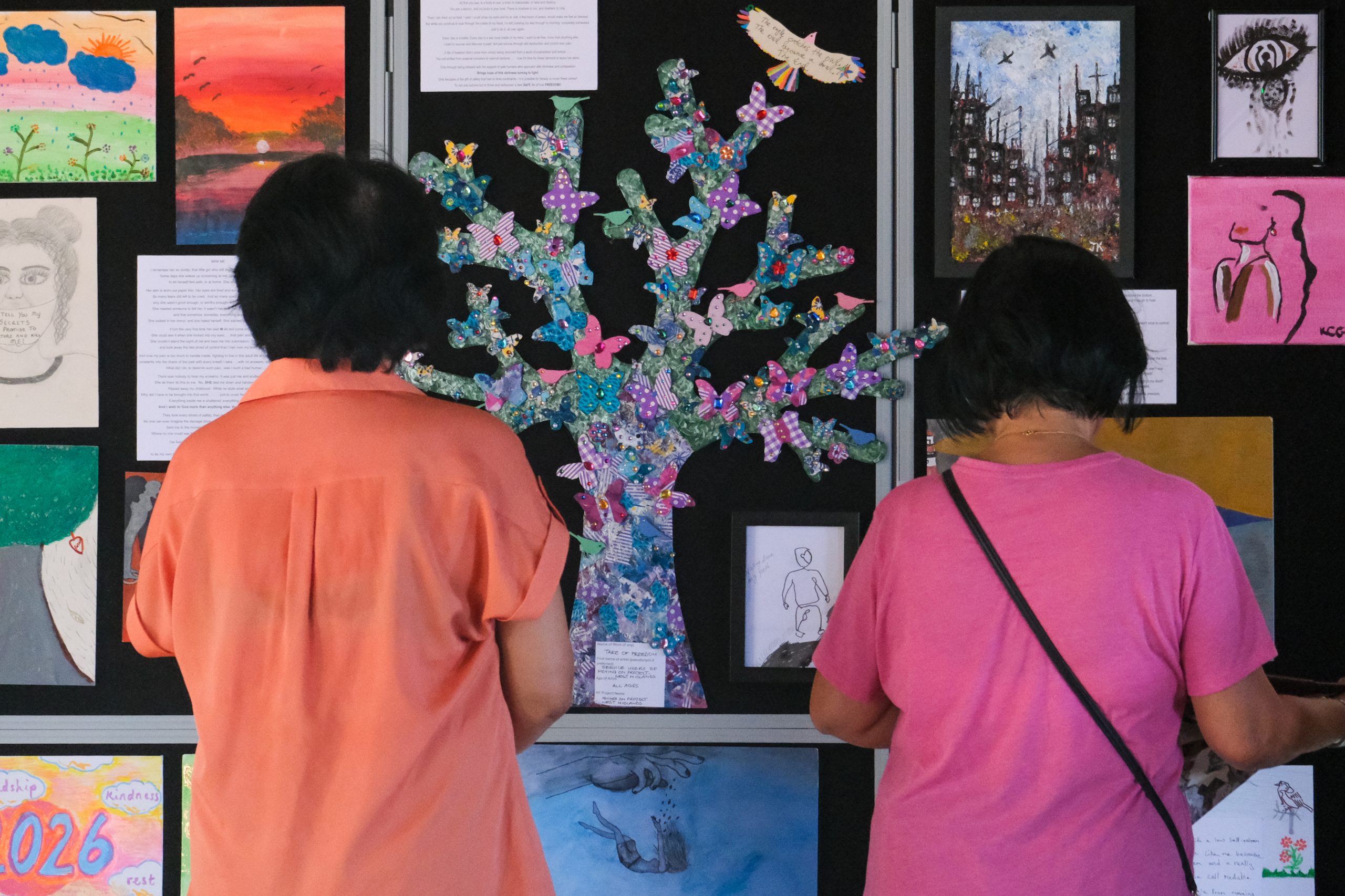
Some artworks are harrowing, and they reinforce just how profound the trauma is. Others are strikingly beautiful and hopeful, focusing on themes like kindness, freedom, and a future beyond exploitation.
One piece that stayed with me included the line:
“Whatever you choose to be, be a good one.”
It’s simple, but it lands with real force when you remember what the artist has lived through. For those unfamiliar with sector jargon or legal frameworks, the art becomes a direct line of communication from survivor to viewer.
David Byrne: Why use art, when we already have data and reports on modern slavery?
Francine Ihenacho: Statistics matter. They help us understand the scale of modern slavery and where it’s happening. But numbers can only take you so far. They can become anaesthetising: you register them, but you don’t really let them in.
Art helps us reclaim the “who” behind the “how many”.
The Roadshow features:
- Paintings
- Sculptures
- Written pieces and poetry
- Mixed-media works and different techniques
That diversity of expression underlines how no two stories are identical. There’s no single “correct” way to process trauma or to speak about hope. Each piece is a world of its own.
Allys Brown: And crucially, the experience of modern slavery is only one part of each person’s identity.
The artwork reveals other dimensions too:
- what they loved in childhood
- memories of family, culture and home
- their interests, gifts and aspirations
- their dreams for the future
That’s where statistics fall short: they can’t convey the fullness of a person’s life. The Roadshow insists that survivors are not just “cases” or “victims”; they are whole persons, with complex, rich identities that extend far beyond the harm they have suffered.
David Byrne: Why is this kind of initiative especially important now?
Allys Brown: We’re working in a context of growing hostility – in media narratives, in some parts of public opinion, and in certain areas of policy.
There is certainly overlap between immigration and modern slavery. But they are not the same issue, and it’s dangerous when they are collapsed into one. Too often, survivors of trafficking and exploitation are talked about only in terms of border control or as part of abstract debates about numbers.
In recent years we’ve seen:
- Proposed and actual changes to the Modern Slavery Act
- Increasing restrictions on people seeking asylum
- More difficulty for people to access protections and support once they are identified as potential victims of modern slavery
We have taken part in conversations in Parliament, raising concerns and offering suggestions. But as things become more restrictive, it becomes all the more important to re-centre the basic truth: we are talking about human beings who have experienced severe abuse and trauma. They have a right to safety, protection and support.
The Art Roadshow is one way of reasserting human dignity in a climate that can easily slip into dehumanising language. It refuses to let survivors be reduced to statistics or political slogans, and invites people to encounter them as neighbours rather than “problems to be solved”.
David Byrne: Where can people see the Art Roadshow?
Francine Iheancho: The Art Roadshow is travelling as part of “20 Years, 20 Stops”, with the possibility of further dates in 2027 due to strong demand and interest.
Upcoming Exhibitions
- St Martin’s in the Bull Ring, Birmingham
- Date: Tuesday 4 – Thursday 27 August 2026
- Time: TBC
- Address: St Martin’s Church, Edgbaston Street, Birmingham B5 5BB
- Portsmouth Cathedral, Old Portsmouth
- Date: Saturday 12 September 2026
- Time: 11:00 AM – 3:00 PM
- Address: High Street, Old Portsmouth PO1 2HA
- St Simon & Jude Parish Hall, Streatham Hill, London
- Date: Sunday 13 September 2026
- Time: 11:00 AM – 3:00 PM
- Address: Saints Simon and Jude Catholic Church, 5 Hillside Road, Streatham Hill, London SW2 3HL
- St John’s, Rochester, Kent
- Date: Sunday 20 September 2026
- Time: To be confirmed
- Address: Rochester, Kent (full venue details coming soon)
- Liverpool Metropolitan Cathedral
- Date: Saturday 26 September 2026
- Time: 11:00 AM – 3:00 PM
- Address: Cathedral House, Mount Pleasant, Liverpool L3 5TQ
- St Teresa of Avila, Ashford, Kent
- Date: Sunday 27 September 2026
- Time: To be confirmed
- Address: Ashford, Kent (full venue details coming soon)
- Father Hudson’s Caritas, Coleshill, Birmingham
- Date: Friday 2 October 2026
- Time: 12:00 PM – 3:00 PM
- Address: St George’s House, Gerards Way, Coleshill, Birmingham B46 3FG
The roadshow will be continuing throughout October and November across the country. For the full and most up-to-date list of venues and times, visit: 20 Years, 20 Stops – The Medaille Trust Art Roadshow
https://www.medaille-trust.org.uk/events/20-years-20-stops-the-medaille-trust-art-roadshow
David Byrne: How can people support the work of Medaille Trust?
Francine Ihenacho:
If people feel moved by what they see or read, there are several concrete ways to help:
- Visit the Roadshow when it comes near you – the experience of standing in front of the artwork is unlike reading about it second-hand.
- Share what you’ve learned in your parish, community, workplace or on social media, to counter some of the misinformation and stigma around modern slavery and migration.
- Support Medaille Trust financially, if you are able, so that we can continue to provide accommodation, pastoral and practical support, and meaningful opportunities like this project for survivors.
Full details on our work and ways to give are available at:
www.medaille-trust.org.uk.
Ultimately, the Roadshow is a testament to the fact that modern slavery does not have the final word. Survivors are not defined by what was done to them. There is hope, dignity and a future, and all of us have a role to play in making that future possible.
Photography by Siân Thomas-Cullinan, Director of Caritas Brentwood.