
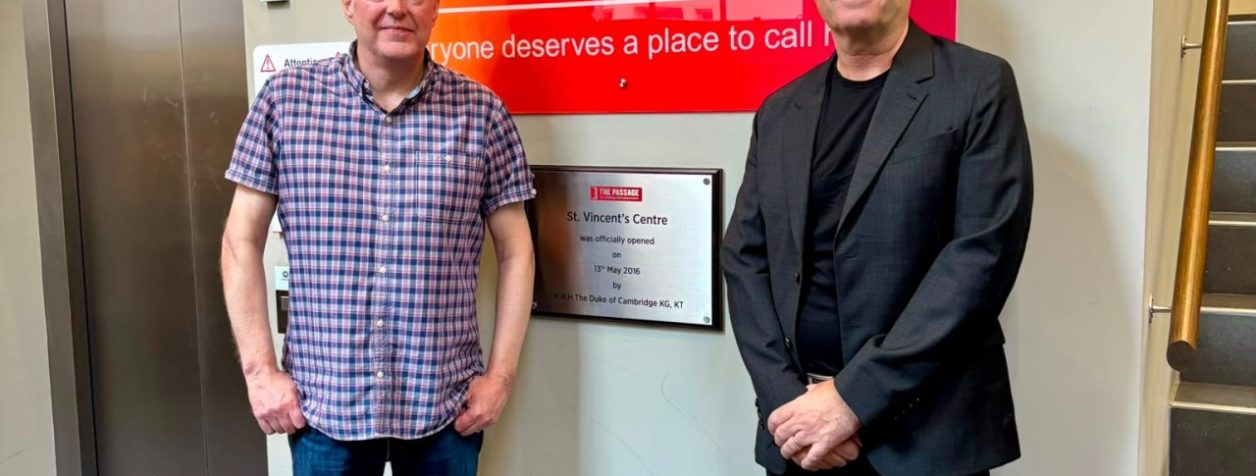
The Passage is one of the UK’s leading homelessness charities and a valued member of CSAN, the Caritas Social Action Network. In this interview, David Byrne (CSAN) speaks with Mick Clarke, CEO of The Passage, about their Vincentian ethos, the importance of lived experience, and why prevention and community are central to ending homelessness.
Identity and Mission
David Byrne: For someone coming across The Passage for the first time, how would you describe the particular need you exist to meet, and what distinguishes you from other organisations in the homelessness sector?
Mick Clarke: The Passage is all about preventing and ending homelessness. We do that in several ways.
We run day services through our Resource Centre in Westminster, where people at risk of homelessness or already experiencing it can come for primary services – food, clothing, showers, etc. – and to get support into accommodation, employment, and health services.
We also run a number of residential projects across Westminster, offering longer-term support for people moving off the streets.
Another big area for us is the link between modern slavery, human trafficking, and homelessness. On the ground, we run services for people who are survivors of trafficking, modern slavery and homelessness. Increasingly, we’re doing international work: we’re setting up a global centre to bring people together to share good practice, and we’ve done joint work with the Mayor’s Office in New York City and with Depaul Ireland in Dublin. That’s really exciting.
A major focus for us is prevention, especially through a project called No Night Out. The idea came from the learning of the Everyone In scheme that Dame Louise Casey led during the pandemic. In fact, the very first planning meeting for Everyone In, just before the first national lockdown, took place at The Passage.
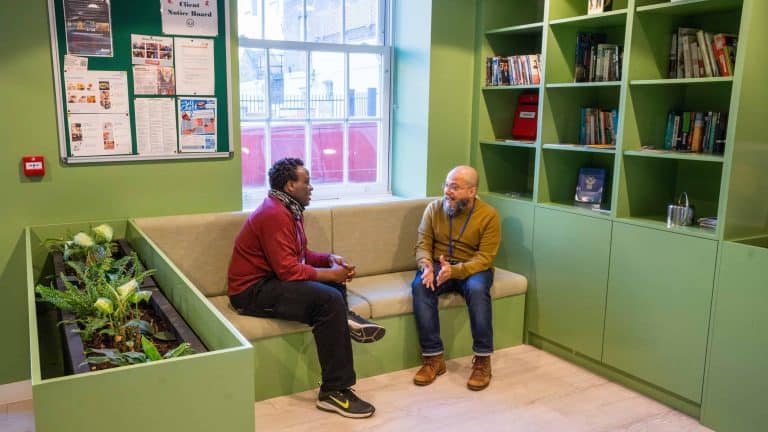
No Night Out is for people with low support needs who are literally about to spend their first night on the street. If someone is on the brink of rough sleeping, we get them into emergency B&B accommodation, then help them move into their own accommodation. At the time we’re talking, over 500 people have been prevented from spending even one night on the streets.
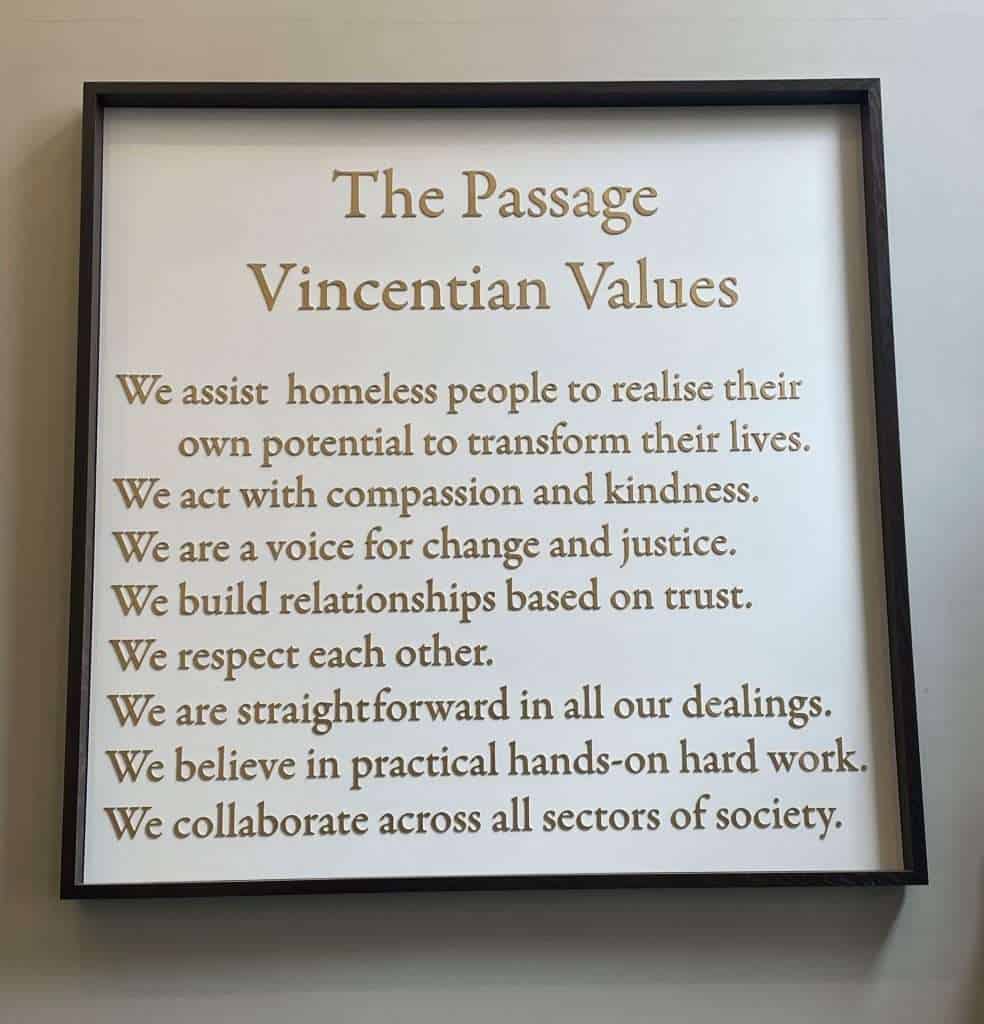
Underpinning all of this is our Vincentian values. The Passage was established by the Daughters of Charity, inspired by St Vincent de Paul, together with Cardinal Basil Hume, then Archbishop of Westminster. We describe ourselves as a Vincentian organisation with a Vincentian ethos and values, and those shape everything we do both operationally and strategically.
Challenging Stereotypes About Homelessness
David Byrne: Could you walk us through the journey of a particular person whose story challenges some of the common stereotypes about homelessness, perhaps someone who’s benefited from No Night Out?
Mick Clarke: It’s important to say there is no one-size-fits-all story, either in causes or solutions. People often talk about Housing First as if it’s a magic bullet. We run a lot of housing-led projects and Housing First has its place, but there isn’t a single model that works for everyone.
Similarly, there are common patterns in why people become homeless, but also huge diversity. The stereotype is often of someone who is “drug-addled” or visibly very unwell. Of course, there are people in that situation, but it’s more complex.
I often say: if I ended up on the streets tomorrow, I wouldn’t initially have a drink problem, a drug problem, or a mental health problem. But if you left me there for more than two weeks, I’d likely have at least one of those. The streets are incredibly dangerous. That’s why prevention is so crucial.
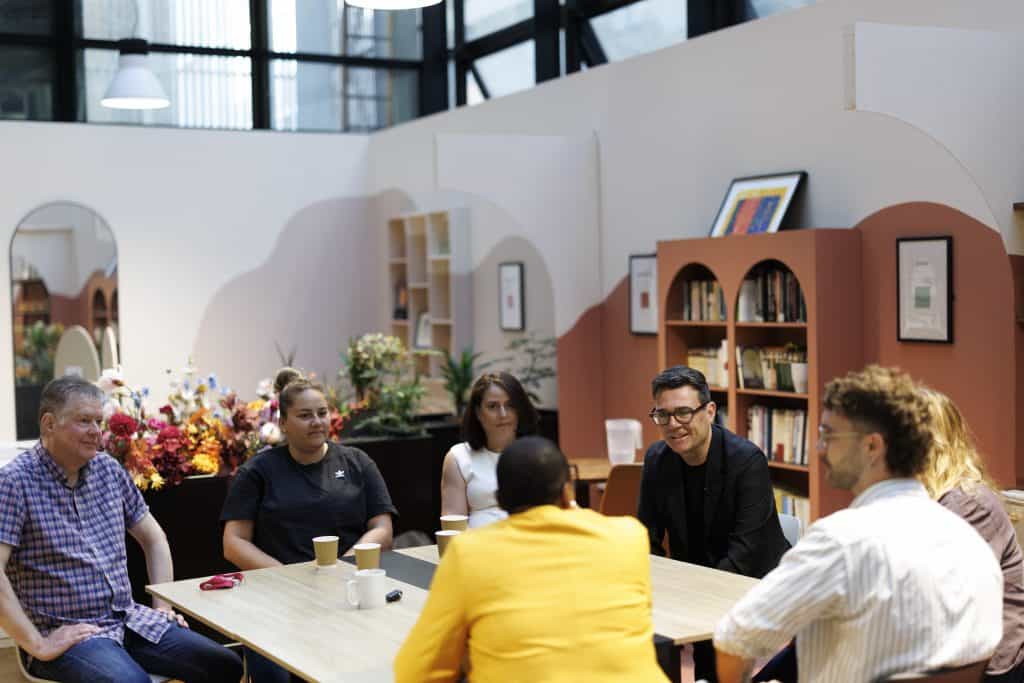
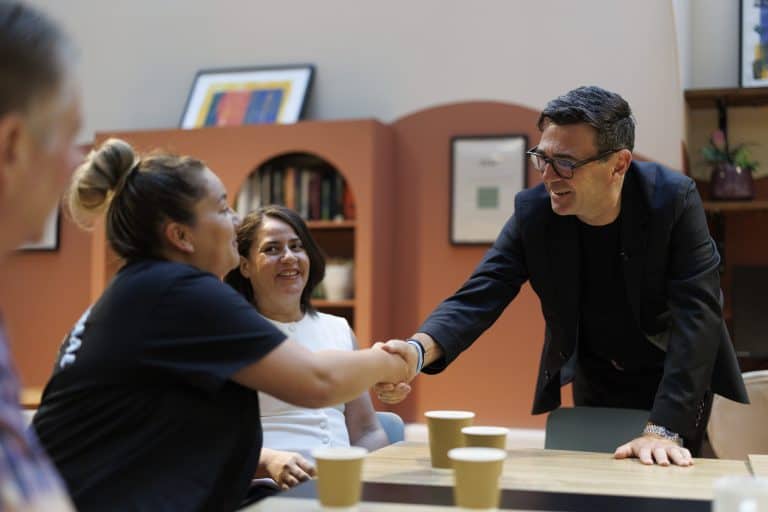
Two stories from No Night Out show this well. I use different names and some details are changed, but both women actually met the new Prime Minister when he visited The Passage at the start of his first day as PM. We’ll call them Susan and Sarah.
Susan had a job, but it was a very fragile job that was linked to her accommodation. When the job went, the accommodation went, and she suddenly found herself on the brink of rough sleeping. She came to our Resource Centre, and we were able to prevent her becoming street homeless through No Night Out. She’s now in her own flat.
Sarah had been very successful in the fashion world, with her own small label. She got into debt, and everything came down like a house of cards. Within weeks, she went from doing very well to sleeping in a London train station. She came to The Passage, we worked with her, got her into accommodation and support, and she began to rebuild her life.
What’s especially powerful is what both Susan and Sarah are doing now.
- Susan is part of a project we call Coactivate. When someone who has been homeless moves into their own accommodation, that first night can be almost as frightening as the first night on the street. One of my bugbears is the phrase “independent living” – none of us truly lives independently. We all rely on support networks: friends, family, colleagues. Yet we sometimes expect people who’ve experienced profound trauma to manage alone. Coactivate pairs people moving into their own place with a mentor who has also been homeless. Susan is now one of those mentors, “buddying” someone new into their home. She’s gone from being supported by No Night Out to giving back and helping others.
- Sarah is one of our Lived Experience Members, advising The Passage on services and strategic issues. We have a strong focus on the voice of lived experience, and she’s part of our Lived Experience Assembly. She’s also advised the Mayor of London on his homelessness strategy and worked with central government. So not only has her immediate crisis been addressed, but she’s now shaping policy and practice.
All of this flows from our Vincentian ethos: it’s not enough just to address the primary issue – getting someone off the streets. We want to look at the whole person and ask: how do we empower this person, so they can use their God-given talents to effect change? That’s what you see in stories like Susan’s and Sarah’s.
The Power of Lived Experience
David Byrne: We can gather statistics and data on homelessness, but what difference does it make when we really pay attention to people’s lived experience? What impact has amplifying those voices had on policy and practice?
Mick Clarke: Even if we just look at The Passage, we work with thousands of people each year. It’s very easy, almost inevitable, to slip into thinking in terms of numbers. Our values constantly pull us back to people.
My personal litmus test is this: when I’m meeting someone using our services, I ask myself, “How would I want to be treated if this were me? Or my mum, my dad, my son, my daughter?” That sense of human dignity is fundamental.
To embed this, we have two main structures:
- An Experts by Experience Group, which informs our frontline services.
- A Lived Experience Assembly (which Sarah sits on), which feeds into strategy and governance.
The key phrase for me is: we want to deliver services with people who are using them, not just to them. I can’t think of a better way to improve services than listening to people who’ve been through them. If you’ve got a leak, you want to talk to a plumber, not an accountant. In homelessness, the “plumbers” are the people who have actually lived it.
The Psychological Impact of Homelessness
David Byrne: What happens to a person, psychologically and practically, after their first night, first week, first month of being homeless, whether on the streets or in more precarious, unstable situations?
Mick Clarke: I struggle to think of many situations where you would feel more vulnerable than losing your home.
Most of us, most of the time, take housing for granted. You have a long day, you come home, and there’s the comfort of your own space. One person with lived experience once said to me, “Bed is such a small word, but such a massive thing if you don’t have one.” We get into bed and relax without thinking. But it’s not just comfort, it’s safety.
Home is where you close the door and feel safe. When that’s suddenly stripped away, you are exposed – not just to the elements, but to crime and exploitation. People living on the streets are far more likely to be victims of crime than perpetrators.
Certain groups, like women, can feel particularly vulnerable. Many will try to hide, sleep on night buses, stay out of sight of obvious “rough sleeping spots”, which can make it harder for outreach teams to find and support them.
Over time, the impact on health is huge:
- Physical health deteriorates: exposure, poor nutrition, lack of rest.
- There’s a high risk of developing addictions, often as a way of blocking out the fear and trauma.
- All of this feeds into mental health: anxiety, depression, PTSD, and more.
The longer someone is on the streets, the harder it is to support them back into stability. That’s exactly why we place such a premium on prevention, intervening before that first night out.
I often think of the Kübler-Ross stages of grief, denial, anger, depression, acceptance. Many people experiencing homelessness go through similar emotional journeys: disbelief (“How has this happened to me?”), fear (“What am I going to do?”), and often a kind of grief for the life they’ve lost.
Our job isn’t to get people to “accept” homelessness, but to reach a point of hopeful acceptance about a route out. That’s why, when we support people into accommodation, we’re not satisfied unless we’ve helped them to develop agency, not need an agency. That means helping them put down roots and relationships in the community: neighbours, local groups, work, faith communities, whatever it might be. Because being alone in a flat with no support network can be terrifying in its own way.
Catholic Social Teaching and The Passage’s Ethos
David Byrne: The Passage is a member of CSAN and is grounded in Catholic social teaching. How do principles like human dignity, solidarity, and what we might call building a “civilisation of love” shape your approach to homelessness?
Mick Clarke: On a personal level, I’m a practising Roman Catholic, and I stress practising because I’ve still got plenty of work to do! I’m a regular Mass-goer. But it’s important to say that our staff, volunteers, and clients come from all faiths and none.
Our Vincentian values are drawn from quotations from St Vincent de Paul, adapted into modern language. There are eight of them, and wherever you stand on faith, you’d struggle to disagree with any of them. They speak deeply to Catholic social teaching, especially around human dignity.
We always say: see the person, not the problem. At one end, we support people whose situations are relatively straightforward to resolve: they’re about to become homeless, have low support needs, and with the right help can move quickly into work and stable housing. At the other end are people with very complex needs, long-term rough sleeping, serious mental health issues, addiction. Our values insist that, in every case, we see a person who is precious in the eyes of God, not a bundle of “issues”.
That’s one way Catholic social teaching shapes us.
The second is around solidarity and subsidiarity. We often say: homelessness is a societal issue that requires a societal solution. Everyone has a role to play:
- Larger frontline organisations like The Passage.
- Local community and faith groups, including very small, volunteer-led projects.
- Businesses, for example, one of our street outreach teams is funded entirely by the local Business Improvement District.
- Individual supporters, through volunteering, donating, advocacy.
None of this is just “government’s job”. It’s the shared responsibility of society. That’s pure Catholic social teaching: “I am my brother’s keeper.” In the run-up to the last election, we set out three election asks, and they’re very much shaped by this thinking:
- Invest in what works.
A huge amount of public money is spent on homelessness, but it isn’t always driven by evidence. We’d like to see a more honest, “helicopter view” of what’s actually effective on the ground, whether that’s a big charity, a local authority, or a tiny parish project, and then invest more in what’s clearly working and less in what isn’t. - Leadership and accountability.
When Dame Louise Casey was Rough Sleeping Tsar under the Blair government, she had real authority across departments and could get things done. We haven’t really had that kind of cross-government leadership since. That’s why it was so significant that the new Prime Minister chose rough sleeping as his first major policy announcement and that he came to The Passage to hear from people directly. - A radical approach to social housing.
We’ve argued for something like a new Beveridge Report moment for housing, a bold rethinking of how we provide social housing in this country. We’ve talked about the need for something like “GB Housing”, social homes built and owned by the state, and crucially not sold off.; it’s about ensuring long-term, secure, affordable homes as a foundation of a just society.
All of that arises from Catholic social teaching: the dignity of the person, the common good, the preferential option for those made poor, solidarity, and the conviction that everyone has a part to play.
Why The Passage Is Part of CSAN
David Byrne: The Passage is a longstanding member of CSAN. Why are you part of the network, and what value does it bring to you?
Mick Clarke: In some ways, because of our location and the nature of our work, The Passage is already quite well connected, with local, regional and central government, as well as other agencies. So we may not need to lean on CSAN as heavily for advocacy as some other members do.
But membership is still very important to us, for a few reasons.
First, it’s about being part of a wider family that shares that Catholic identity and commitment to Catholic social teaching. Knowing there are other organisations across England and Wales wrestling with similar questions of faith and practice is very reassuring.
Second, CSAN offers what I’d call a “menu of options”, parliamentary receptions, networking events, webinars, formation programmes, and so on. We won’t use everything, but it’s incredibly helpful to know those opportunities are there when we need them.
A good, very practical example is the work CSAN has been doing around Pope Leo’s latest social teaching around AI. We have our own AI policy, and we’re working with a corporate partner to develop how we use AI ethically across the organisation. The material coming from CSAN, grounded in Catholic social teaching and human dignity, has been really helpful for us internally. Even if I haven’t been able to join every working group, I can forward key resources to the team who are leading for us on AI and say, “This is important. Build this into your thinking.”
Encountering Homelessness in Everyday Life
David Byrne: Many of our readers will regularly encounter people who appear to be rough sleeping, on the way to work, at train stations, around church communities. What are some practical things people can do in those moments? And is there anything you’d advise against?
Mick Clarke: I’m always cautious about being too prescriptive about what people shouldn’t do, because at the end of the day, it’s you, not “the organisation”, who is meeting that person’s gaze.
The Passage’s organisational view is that we don’t recommend giving money on the street. Sometimes there are addiction issues at play; sometimes people are being controlled by organised groups. But I would never criticise an individual who chooses to give. What we try to do is equip people to make an informed choice.
What I would strongly encourage is:
- Acknowledge the person.
Don’t just walk by and ignore them. A simple, “Sorry, I can’t give today, but I hope you’re okay” can make a big difference. It sounds small, but for someone who feels invisible, being seen and recognised as a human being matters enormously. Most of the time, people are grateful even for that basic acknowledgement. - Offer practical help.
In very hot weather, a bottle of water can literally be lifesaving; extreme heat can be as dangerous as winter cold. Buying a hot drink or a sandwich, if someone wants it, is another very practical way to help. Or, if you know of local services (for example, if you’re near The Passage) you can say, “Do you know about The Passage? They might be able to help,” and give basic directions or information. - Use StreetLink.
There’s a website called StreetLink. If you go online and enter basic details about where you’ve seen someone sleeping out, StreetLink will pass that information to the local commissioned outreach team. Very often, outreach teams already know the person and are working with them, but sometimes they don’t. Either way, it’s a constructive way of ensuring the person is on the radar of local services.
So, in summary:
- Don’t ignore people.
- Offer practical, non-judgemental help where you can.
- And use tools like StreetLink to connect people with specialist support.
A Prime Minister’s First Day: What It Signalled
David Byrne: The Passage is also known for having strong links with public figures, including your patrons. Recently, the new Prime Minister chose to visit The Passage on the morning of his first day in office. Why do you think he came, and what did that visit mean?
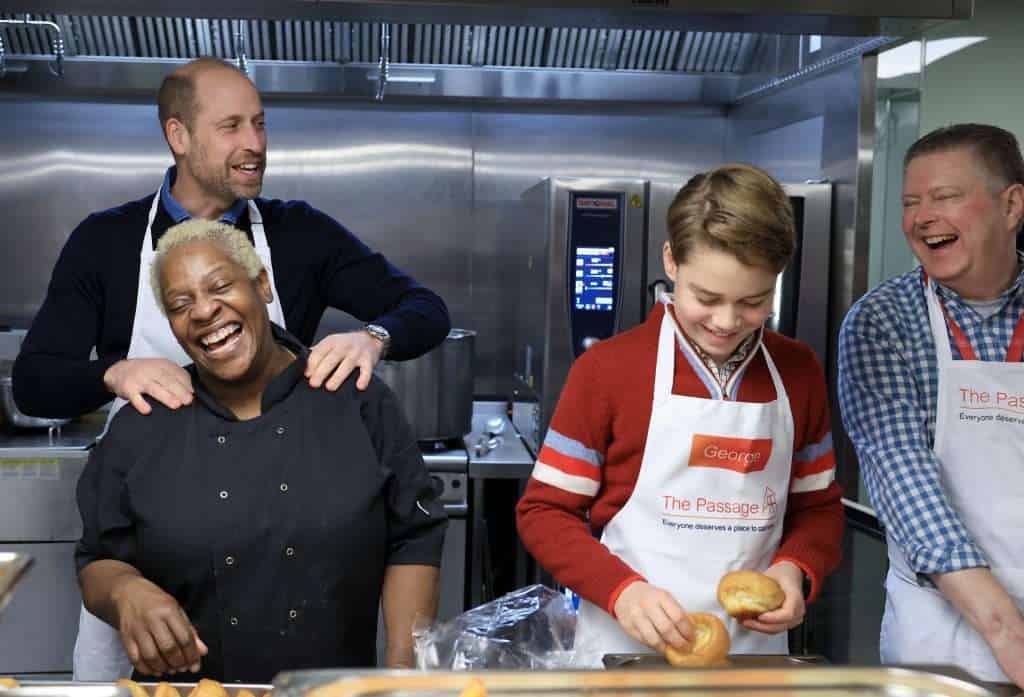
Mick Clarke: Our Patron is the new Archbishop of Westminster, Richard Moth, and our Royal Patron is Prince William, who has visited us several times, most recently with Prince George. Those relationships matter because they help to amplify the issue of homelessness.
The visit by the new Prime Minister on the morning of his first day in office was striking. This is someone who, later that day, would go to Buckingham Palace to be invited to form a government and then move into Number 10. It must be one of the most surreal days of your life. For him to decide, “I’m going to start this day at The Passage at around 6:30am,” spoke volumes.
It told me a few things:
- It said something about him as a person, about where his values lie. To begin such a momentous day by spending time with people who are sleeping on the streets suggests that homelessness is not a peripheral issue for him.
- It was, I think, an incredibly grounding way to start the day. All the ceremony that followed could sweep you up. But beginning in a place where people are waking up on the pavement brings a very different perspective.
We took him out with our street outreach team. He met people who had literally just woken up on the streets, and we talked with them about their situations and what might help. It was moving and very real.
Then we went back into The Passage, almost like moving from street to home, and he spent time with our lived experience group – people who had been homeless or at serious risk, are now in accommodation or employment, and are actively shaping our services. Most of the time, he was in listening mode, asking what had made a difference for them and what needs to change.
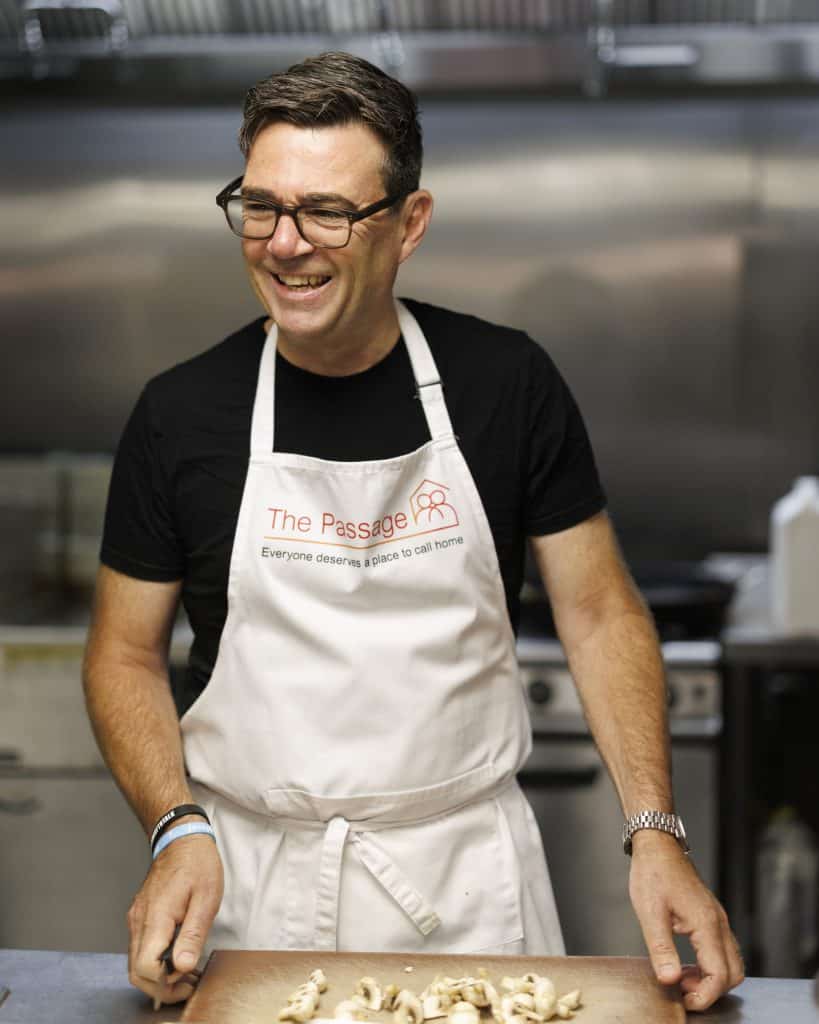
Finally, there was a simple, practical moment: he helped out in the kitchen, chopping mushrooms and preparing breakfast alongside staff. No airs and graces, just getting stuck in.
Whatever your political colour, I was impressed. To choose, on such a historic day, to centre yourself in the reality of homelessness, and to do so in a very unflashy, human way, felt significant. It also sent a powerful message that rough sleeping and homelessness are not marginal issues but belong near the top of the agenda. It was good to see this confirmed in his first speech later that day, on the steps of NO10 and his first policy instruction to be to end rough sleeping.
A Shared Measure of Success
David Byrne: There’s a famous idea that the success of any society is measured by how it treats its most vulnerable members. It feels as though your work, and that visit, both speak into that. How do you see The Passage and CSAN contributing to that wider vision?
Mick Clarke: I think that phrase sums it up very well. For us, ending homelessness is not just about bricks and mortar, or even just about services. It’s about how we, as a society, choose to see and respond to one another, especially to those who are most vulnerable or excluded.
The Passage brings a very specific expertise and a very particular Vincentian lens to that work. CSAN brings a national network of Catholic-inspired organisations, large and small, across England and Wales. Together, we’re part of a wider ecology of care, a civilisation of love, to use that phrase.
If, in thirty years’ time, people look back and say, “We became a society where it was unthinkable for someone to have to sleep on the streets,” then The Passage, CSAN, and many others will, I hope, have played our part.
Photography by Simon Dawson/No 10 Downing Street and Andrew Parsons/Kensington Palace