

Communications and Programmes Officer David Byrne reflects on Caritas Social Action Network’s presence at WeBelieve Festival and on the call to be joyfully and unapologetically Catholic while remaining fully present in a wounded world.
The first thing that struck me at WeBelieve Festival was the sheer number of people gathered together to celebrate their Catholic identity and enter into community and solidarity.
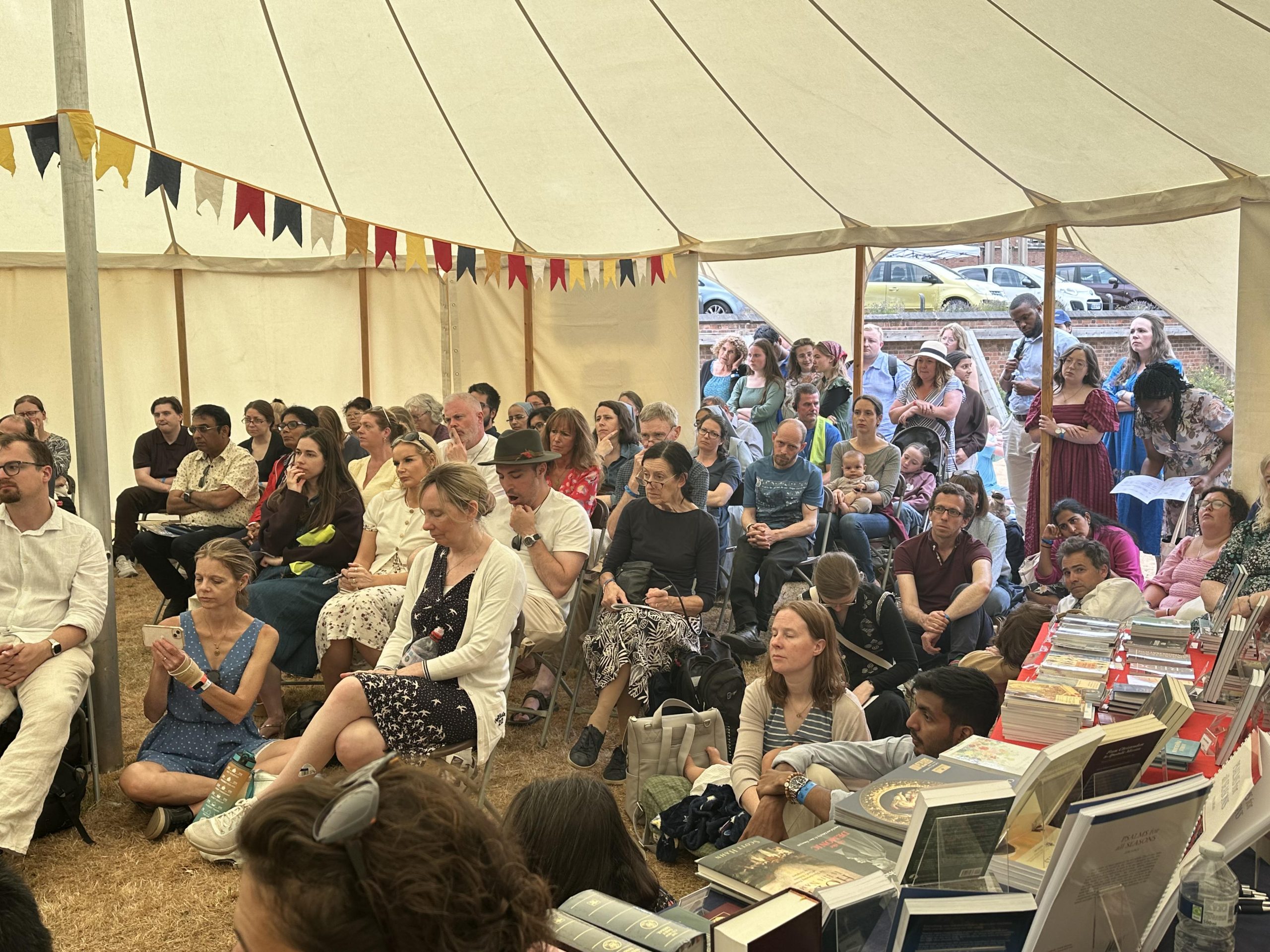
They came from across England and Wales and further afield. There were people of every age, but the number of young people and families was particularly hopeful. Catholicism did not look like a dying or ageing phenomenon. It looked alive: a faith being handed from one generation to the next.
There was also a remarkable variety of laity, priests and religious gathered in conversation. In a sense, the festival modelled a more synodal and less hierarchical way of being Church: a chance for all of us to sweat together in hot tents, listen to and learn from one another, and discover some of the inspiring work taking place within the domestic Church.
Enlarging the Tent
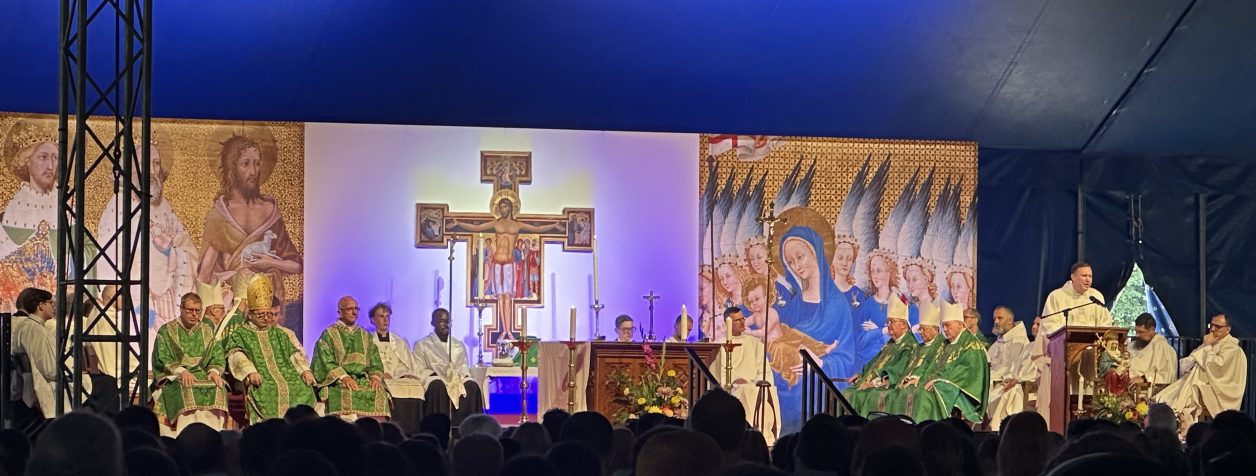
The sheer variety of Catholic life was embodied in the festival’s liturgical celebrations: from the solemn beauty and order of the Traditional Latin Mass, to the warmth and solidarity of a vernacular praise-and-worship Mass, to the ancient beauty of the Syro-Malabar Holy Qurbana.
This demonstrated that communion in diversity matters more than bland uniformity, a glimpse of the universality of the Church expressed through distinct rites, spiritualities and cultures.
The omnipresence of tents also became, for me, a deeply biblical symbol. Seeing families encamped together on the green brought to mind Israel gathered in the wilderness around the Tabernacle. At WeBelieve, the tents seemed to gather around St Peter’s, where the Eucharist drew the community together and God’s sacramental presence nurtured us throughout the weekend.
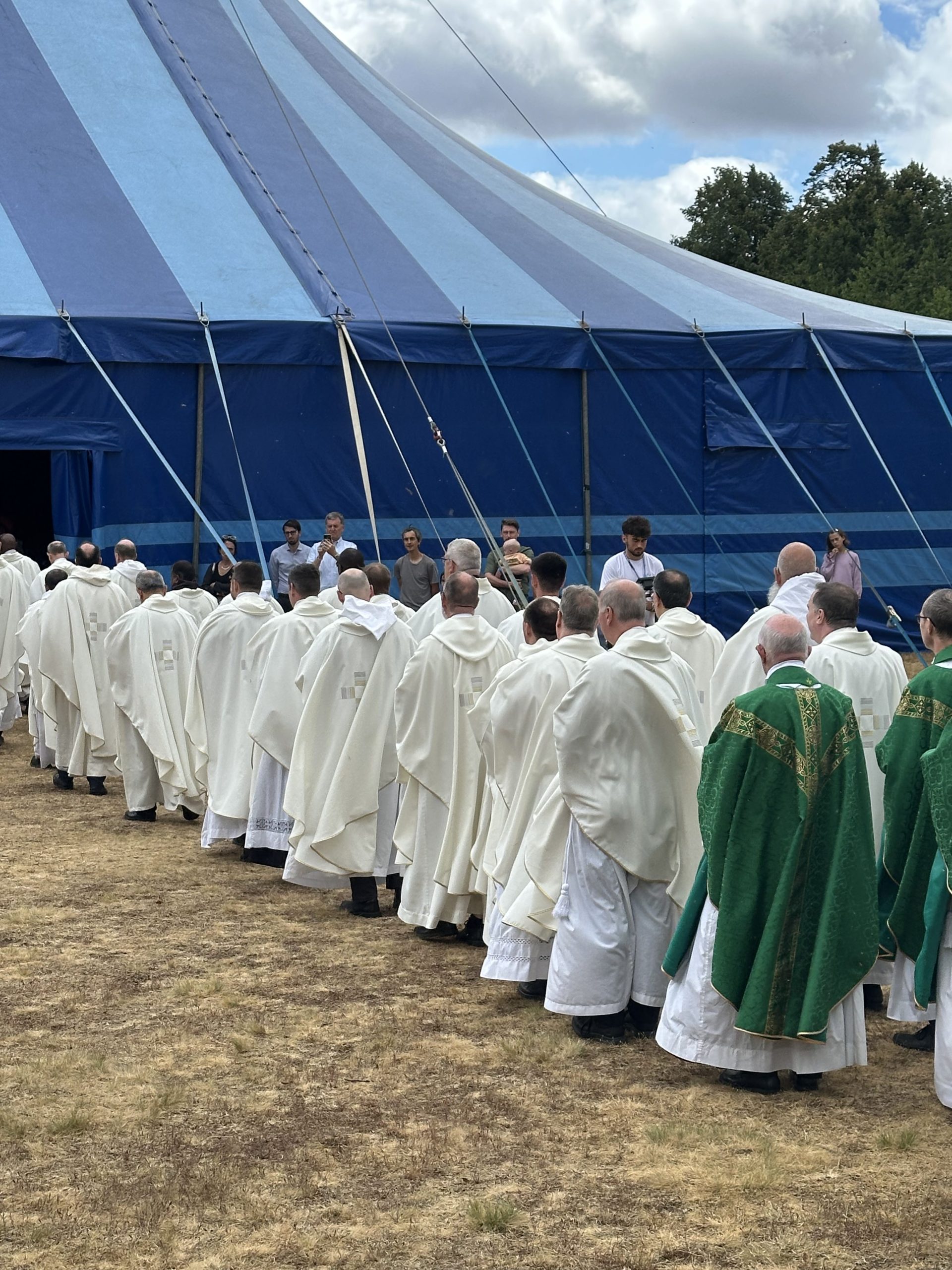
It also recalled the invitation of Isaiah 54:2: “Enlarge the space of your tent.” Adopted as the central image of the Synod’s Working Document for the Continental Stage, the tent is described as “a space of communion, a place of participation, and a foundation for mission.”
That could almost have been a description of WeBelieve itself. But it also leaves us with a question: how can the festival continue enlarging its tent as it grows? How can it draw more people into communion, participation and mission over the next seven years, as the Church journeys towards the great Christian commemoration of 2033?
A Hunger for Apostolic Catholicism
At the CSAN stall, there was no single conversation that summed up the weekend. There was, however, a consistent sense (particularly among young people) of hunger for a Catholicism capable of responding to the wounds of the world.
People were not satisfied with an inward-looking, fortress-like Catholicism that retreats from public life. The world is simply too broken for that.
In expressing their frustration, people weren’t rejecting the Church’s sacramental and liturgical life. Quite the opposite: we must first be fed and nourished by Christ. But the Eucharist sends us out. Many of those who spoke to us seemed to be seeking an apostolic mandate: to evangelise through words and deeds; to confront injustice in concrete and particular ways; and to help reshape the social, political, economic and spiritual fabric of our nations in the image of the Kingdom of God.
This is precisely what CSAN strives to equip people to do. Whether we are defending people facing immediate threats to life and dignity, including the unborn and those endangered by proposals for assisted suicide, or undertaking the slower labour of building a society rooted in human dignity, the common good, solidarity and subsidiarity, Catholic social action requires courage, conviction and practical collaboration.
My experience at the stall convinced me that CSAN must strengthen its witness, deepen its work of formation and be willing to lead with greater confidence.
Catholic and Fully Present
The sessions I attended approached a common question from different directions: what does it mean to be totally, joyfully and unapologetically Catholic while remaining fully present and active in a fallen and wounded world?
How do we receive the courage and strength of the Holy Spirit to stand firm in the public square, embody the disarming power of the Gospel and participate in the transformation of our nations – labouring for peace, justice and a society in which both the individual and the common good are honoured?
ADF’s The Cost of Freedom: Arrested for Silent Prayer challenged me to consider the case of Isabel Vaughan-Spruce in terms deeper than freedom of expression. The discussion presented it as a question about the possible criminalisation of thought itself.
The freedom to think, reason and form one’s conscience belongs to the integrity of the human person. Our rationality participates in the rationality of God. Freedom of thought is therefore fundamental not only to Catholic belief but to the democratic society we seek to defend. Whatever one thinks about the wider political debate, the prospect of the state scrutinising or penalising interior thought should concern every Catholic.
Lord Maurice Glasman’s Christ is King: Politics Rooted in Covenant offered a vision of covenant capable of challenging the atomisation and loneliness of the twenty-first century. I would not endorse every political diagnosis offered during the session, but its central vision remained with me: society is not merely a collection of isolated individuals pursuing their own interests. We inherit obligations to God and neighbour, and politics must again become the pursuit of civic peace and the common good.
The session that affected me most personally, however, was Faith in the Public Square, sponsored by our friends at the Catholic Union.
Former MP Stephen Pound impressed me enormously. He had been willing to enter the lion’s den of Westminster, a place of power, ambition, compromise and very human frailty. Recent public debate about Parliament’s drinking culture has provided one reminder that Westminster is not generally mistaken for a monastery.
Yet Stephen did not conclude that this world was too fallen, impure or far gone to enter. He believed that this was precisely where a Catholic might be needed, because it was a place in need of the grace and love of Christ.
He spoke movingly about encountering poverty in West London. He remembered seeing a mother pour water over her children’s cornflakes because she could not afford milk. Faced with such suffering, he concluded that prayer must lead to action and that he had to become involved in a real and concrete way.
Stephen disclosed politics to me as a legitimate vocation for a Catholic, perhaps even a necessary field of mission. Catholics are called to enter temporal structures of power, advocate for people who are vulnerable, work for the common good and evangelise quietly through the decisions they make and the way they exercise whatever authority they hold.
He embodied this with honesty, wit, humour and availability. Most importantly, he came across as a man of virtue and love.
Rupert Shortt’s Can Britain Believe Again? added an intellectual dimension to this question. He challenged the assumption that science and Christian belief must be opposed and argued that Britain’s Christian inheritance deserves a more serious hearing. The Church contributes immense, frequently unnoticed social capital to the nation, while Christianity offers a language of grace, forgiveness, solidarity and reconciliation that our fragmented society desperately needs.
Becoming Neighbours
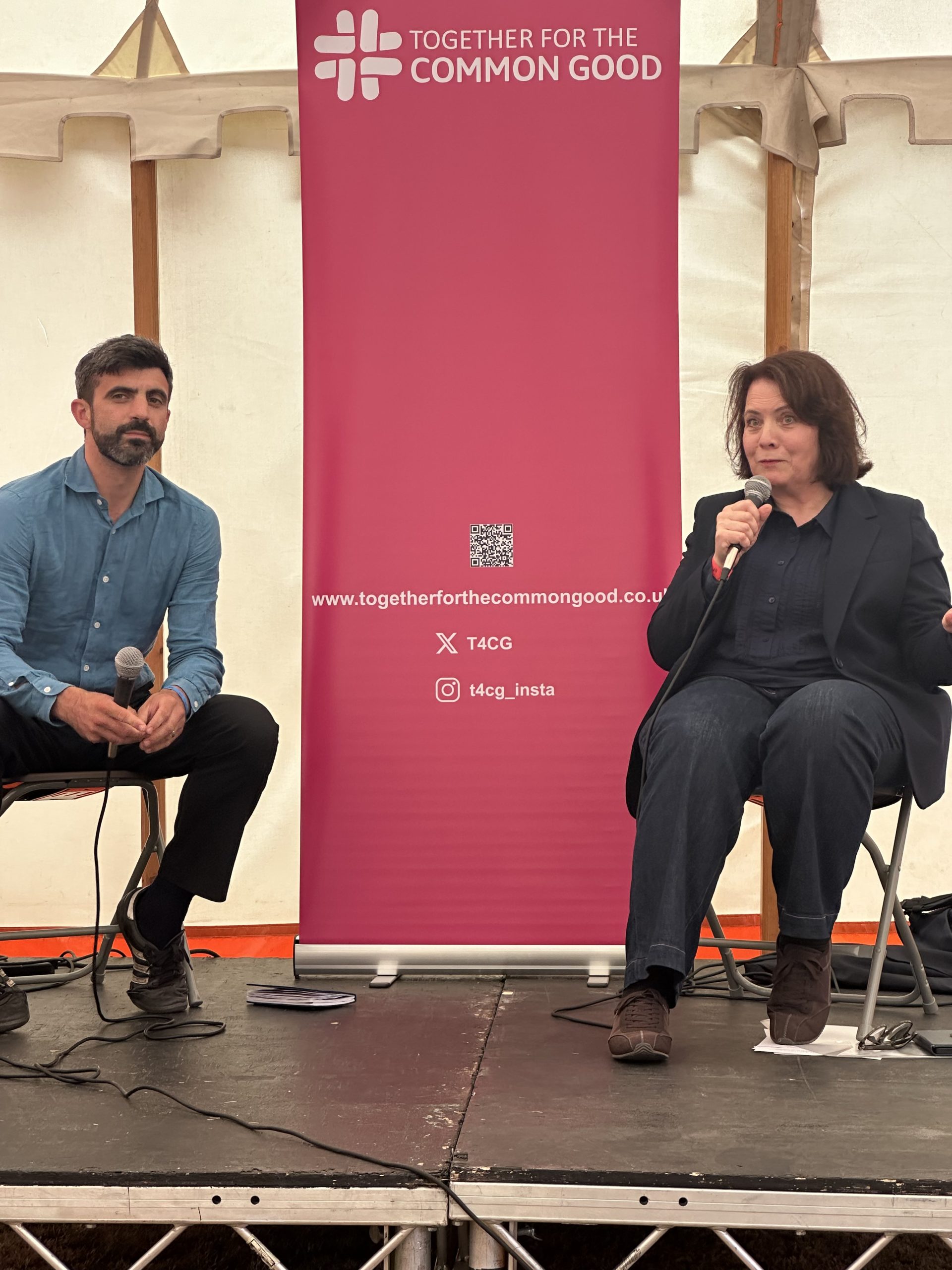
Jenny Sinclair’s Becoming Neighbour spoke directly to CSAN’s work. Her critique of the transactional model of charity challenged us to keep asking whether people’s lived experience is genuinely shaping the support we offer.
It is not enough to design a service for a group of people and deliver it to them. Their dignity demands that support should, wherever possible, be constructed with them. Relationship must remain at the heart of our work rather than statistics or abstract measurements of how many people have passed through a service.
This does not mean that evidence or measurement is unimportant. It means remembering what those measurements exist to serve: the flourishing of persons. What matters is whether somebody has experienced our love and solidarity, rediscovered their own dignity and encountered something of the healing touch of the Holy Spirit.
People are not units of service delivery. They are the reason we exist.
Jenny also spoke powerfully about neighbourliness as a virtue we are being called to recover. In a world of global uncertainty, she directed attention towards small and concrete acts of love: rebuilding relationships, restoring local and intermediary institutions and strengthening the bonds of community where we actually live.
This offered a practical way of thinking about CSAN’s vision of building a civilisation of love in England and Wales. That civilisation will be expressed in national policy and structural change, but it must also be built through innumerable encounters between neighbours.
Magnificent Humanity
A particular highlight of CSAN’s presence came on Sunday afternoon, when we sponsored the Catholic Truth Society podcast roundtable, Magnificent Humanity: Unpacking Pope Leo’s A.I. Encyclical.
More than 150 people gathered in the Truth Marquee to hear Professor Jacob Phillips, Sr Carino Hodder OP and Fr Peter Wygnanski explore the moral, spiritual and social implications of artificial intelligence.
Standing before such a large crowd to introduce the session, I was conscious that this was an important moment for CSAN. It was inspiring to see so many people hungry to hear what the Magisterium of Pope Leo XIV was saying about the supreme dignity of our magnificent humanity and about the challenges and opportunities contained within AI.
The discussion drew out the distinction between intelligence and wisdom. AI can process information at extraordinary speed, but wisdom is formed through relationship, patient attention to reality, moral responsibility and openness to God. A computer may be computationally powerful, but it cannot be wise in this fully human sense.
The panel also explored Pope Leo’s contrast between a culture of power and a civilisation of love. The technocratic culture of power presents human beings as efficient machines and technological change as an inevitability to which we must submit. The civilisation of love insists that technology must remain a tool in human hands, ordered towards dignity, relationship and the common good.
These questions become particularly urgent in relation to work. A future in which technology simply displaces thousands of workers cannot be judged a success merely because it is more efficient. Catholic Social Teaching insists upon the subjective dignity of work: work as an expression of creativity, participation, responsibility and service.
The response to Magnifica Humanitas suggested that the papacy really has its finger on the signs of the times. Pope Leo has offered a responsive model of leadership: speaking with the love of a pastor, the wisdom of the Church and a profound understanding of both human nature and technological change.
For CSAN, the packed session gave renewed strength and impetus to our mission. As the Bishops’ Conference agency for domestic social action, we have a responsibility to help Catholics in England and Wales understand and enact the Church’s social doctrine. People are hungry for this formation and for a Church willing to offer bold, courageous and prophetic leadership.
From Worship to Mission
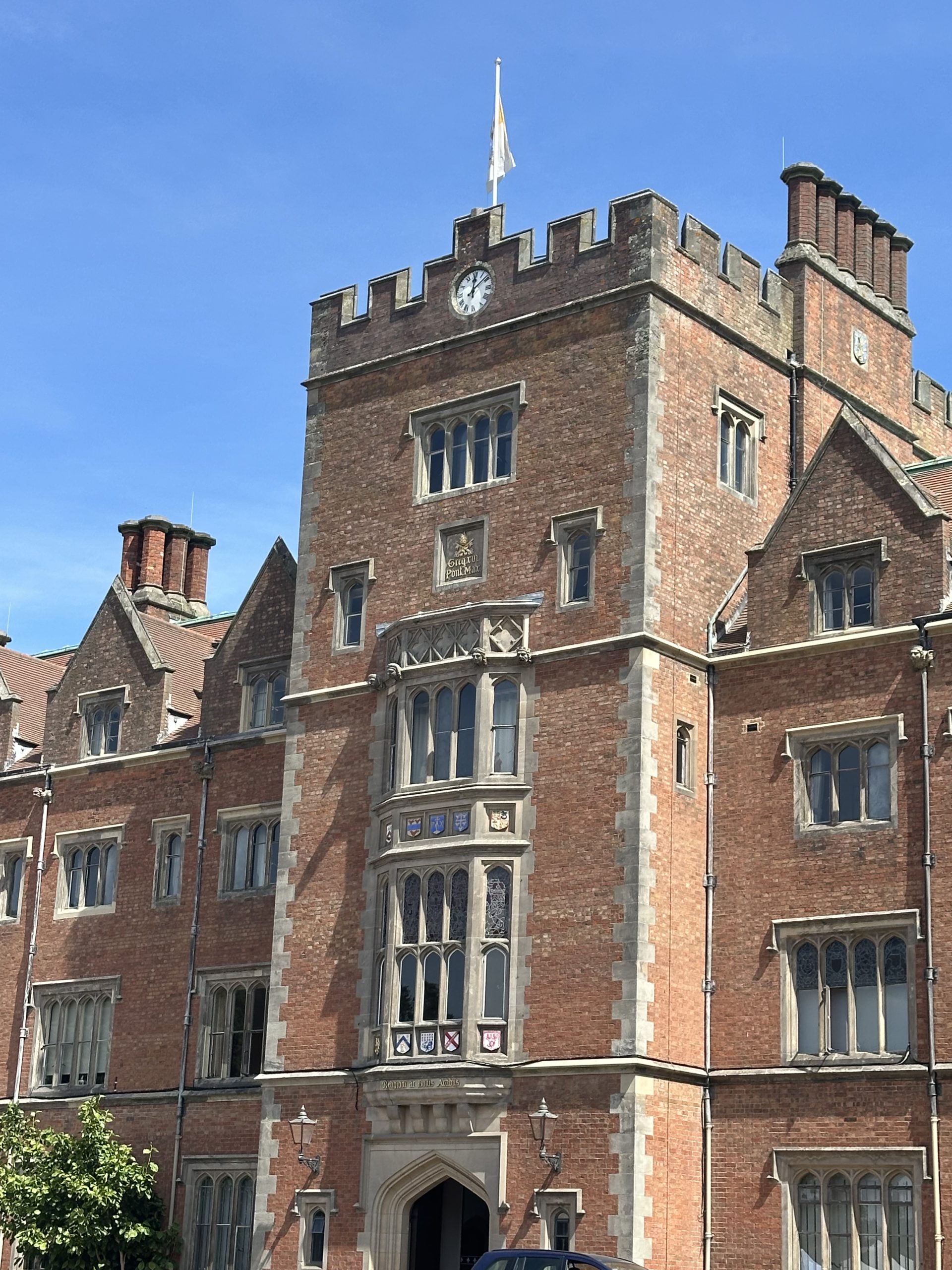
I left Oscott wanting to understand more deeply the politically engaged forms of Catholicism and the relationship between the Church’s liturgical life and CSAN’s social mission.
If there was a tension discernible at WeBelieve, it was the lingering sense that worship and social action sometimes inhabit separate spheres. But they belong together. The altar and the public square are not rivals. They require and nourish one another.
We are gathered by Christ, fed by his Word and Sacrament, and then sent into the world. The Church’s social mission, in turn, brings the wounds, hopes and lived experiences of that world back to the altar. I left WeBelieve convinced that any Catholic revival will become credible only when what we adore at the altar is carried into the public square, when a Church nourished by prayer and the sacraments becomes, with courage and tenderness, the hands and feet of Christ in a wounded world.