

On Friday 24 July, Anne Peacey, the President of the National Just and Peace Network, opened their 48th annual conference at the Hayes conference centre in Swanick.
The theme of this year’s conference was “Just Talk” and as Anne pointed out it wasn’t ‘just’ talk, but Just with a capital J, the need to speak with justice and compassion in a world where the temperature of speech has risen to aggressive and confrontational levels.
Following Anne’s opening remarks, Brian O’Toole from the Social Justice Desk of the Presentation Sisters in Ireland and England, led a powerful session on the need to speak up and speak out in the face of casual racism and nationalism, but in ways which may lead to dialogue rather than confrontation.
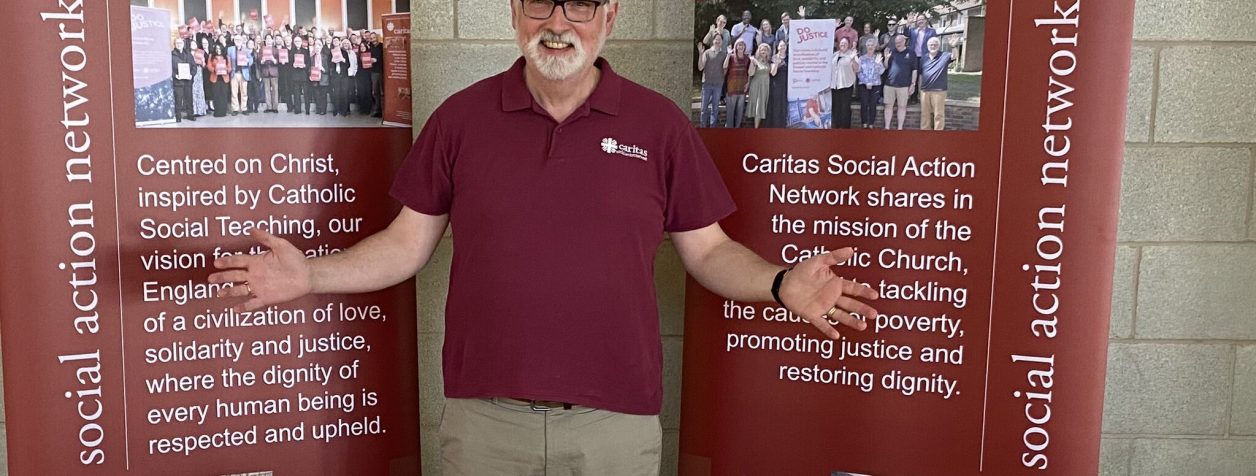
After Brian’s session, delegates enjoyed the Just Fair in the neighbouring hall, with many social action charities represented, including CSAN, where Raymond was on hand to distribute copies of our Annual Review 2025 and our recent Dignity of Workers report.
On the Saturday morning, we heard from Billy Vaughan, the Public Affairs officer for Quakers in Britain. Billy spoke about dialogue, freedom of speech and the right to peaceful protest and outlined an alarming erosion in recent years of the right to protest in the UK.
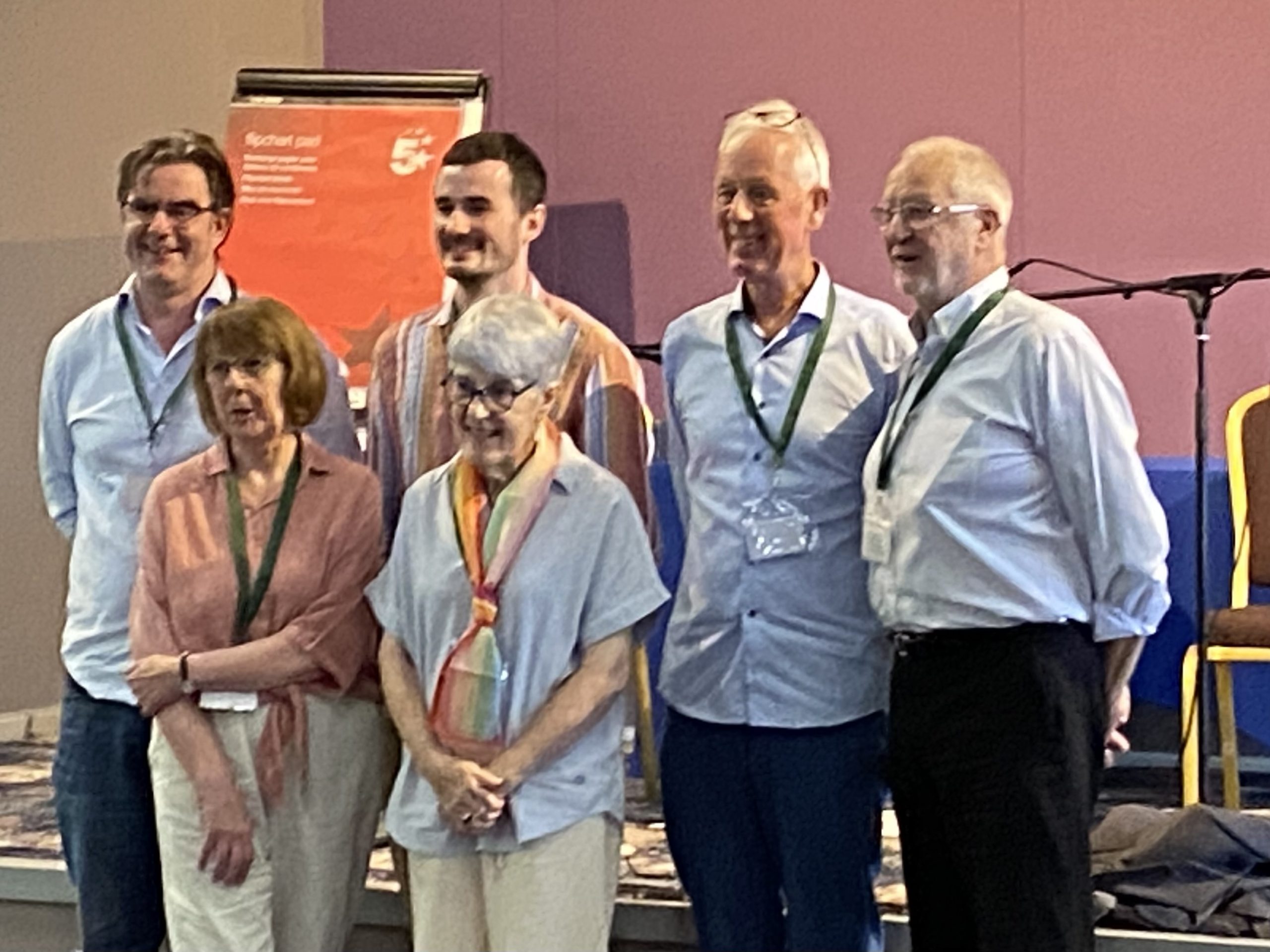
In the panel discussion which followed, chaired by CSAN trustee Sir John Battle, Billy was joined by Paul Morrison from JPIT and Liz Archibald from Hexham and Newcastle diocese. In a wide-ranging discussion, each of them gave powerful testimony about working with asylum seekers in detention centres, working for peace in the north of Ireland and working as an ecumenical accompanier in the West Bank.
In each of these very difficult situations, the need for ordinary encounter was emphasised as a way to lessen the fear and suspicion which results from ideological differences and historical enmity.
It’s harder to hate someone when you’re looking them in the eye, or sharing a cup of tea. What moves people’s hearts is not so much data and arguments, but stories, the reality of lived existence in unjust or oppressive circumstances.
Then connections can be made and hope can come alive.
This report was written by Raymond Friel OBE, CEO of CSAN.